
As Ukraine rebuilds in the wake of war, it faces a complex environmental challenge alongside physical reconstruction. Damage to industrial facilities, power infrastructure, military sites, and buildings has generated large volumes of hazardous waste, increasing risks from substances such as asbestos, mercury, and polychlorinated biphenyls (PCBs). The collapse and demolition of damaged structures, combined with contamination from conflict-affected areas, have created an urgent need for stronger systems to identify, track, treat, and safely dispose of hazardous materials.
Addressing these challenges is critical not only for environmental protection, but also for safeguarding public health and enabling safe reconstruction. As Ukraine advances its recovery efforts, strengthening hazardous waste governance, environmental monitoring, and laboratory capacity has become a national priority.
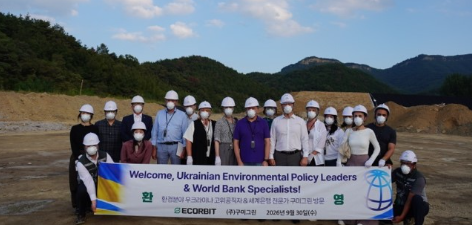
To support these efforts, seventeen representatives from Ukraine participated in a week-long knowledge exchange in the Republic of Korea, supported by the Korea Green Growth Trust Fund (KGGTF). The delegation included officials from Ukraine's Ministry of Economy and Environment, members of Parliament, and laboratory specialists from the Ukrainian Laboratory of Quality and Safety of Agricultural Products at the National University of Life and Environmental Sciences of Ukraine.
The exchange complemented the World Bank's Hazardous Waste Management and Policy Development Project, which supports Ukraine in strengthening institutions, improving pollution inventories, developing hazardous waste management systems, and building laboratory and technical capacity. Through meetings with government agencies, research institutions, and technical experts, participants explored how Korea developed an integrated approach to hazardous waste management and how key lessons could be applied to Ukraine's recovery and long-term resilience.
Learning from Korea's Experience
The delegation explored how Korea manages hazardous waste through clear regulations, strong institutions, and technology-enabled oversight.
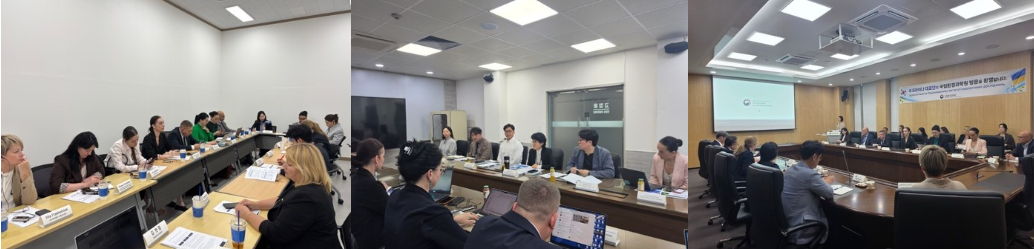
At the Ministry of Climate, Energy and Environment (MCEE), participants examined the policy and regulatory framework guiding hazardous waste management. Discussions covered institutional responsibilities, environmental liability, and mechanisms for addressing pollution-related damages.
The National Institute of Environmental Research (NIER) demonstrated how scientific data, monitoring, and standardized testing support evidence-based environmental decision-making.
At the Korea Environment Corporation (K-eco), delegates learned about hazardous waste treatment, monitoring, and facility management. A highlight was Allbaro, Korea's digital waste tracking system, which monitors waste from generation to final treatment or disposal, improving transparency and regulatory compliance.
Site Visits on Treatment and Monitoring
Field visits provided practical examples of how Korea manages hazardous waste and environmental risks.
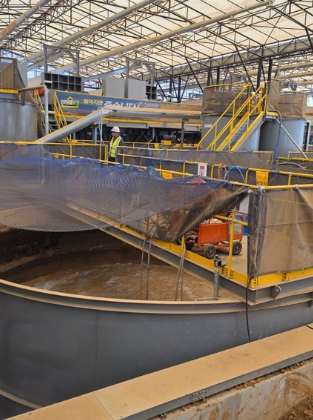
At a former military site undergoing remediation, participants observed how contamination is assessed, mapped, and treated using physical and chemical soil-cleaning methods. The site also demonstrated a partnership model involving government agencies, K-eco, private investors, and environmental service providers. Plans to redevelop the land for residential use illustrated how environmental remediation can support broader development goals.
The delegation also visited an asbestos landfill, a PCB dechlorination facility, and a national water quality monitoring station, gaining insights into specialized treatment methods, safe disposal practices, and continuous environmental monitoring systems.
Strengthening Laboratory Capacity
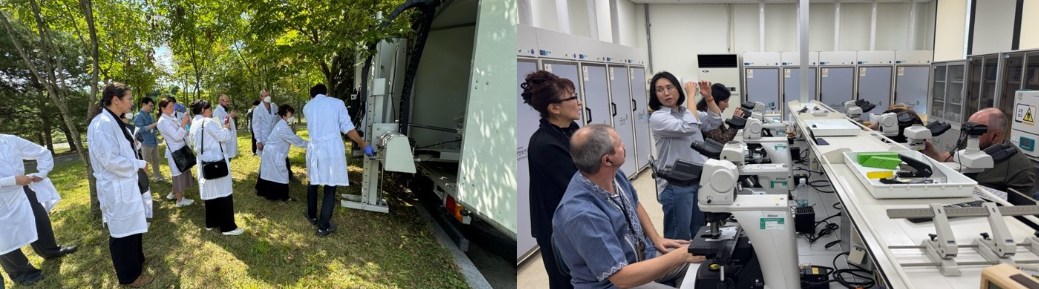
Laboratory specialists participated in hands-on training focused on identifying and analyzing hazardous substances.
At K-eco, participants received training on mercury and PCB analysis, including sample extraction and preparation techniques. At the Korea Occupational Safety and Health Agency (KOSHA), they learned methods for detecting asbestos in bulk materials, air, water, and soil samples.
Training emphasized quality assurance, calibration procedures, contamination controls, and standardized analytical methods that help ensure reliable results.
Looking Ahead
The exchange highlighted how effective hazardous waste management depends on strong governance, digital tracking systems, reliable laboratory capacity, and appropriate treatment infrastructure.
Lessons from Korea will help inform Ukraine's efforts to strengthen hazardous waste inventories, improve regulatory frameworks, develop treatment capacity, and establish a pilot laboratory. The delegation and World Bank team also identified opportunities for continued collaboration with Korean partners through technical assistance, knowledge sharing, and implementation support.
As Ukraine prepares for its recovery, these efforts will help build a safer, cleaner, and more resilient future.
Grant: Strengthening Hazardous Waste Governance for a Green and Resilient Ukraine
Grant Year: Year 13 (2026)
TTL: Irina Ghaplanyan, Senior Climate Change Specialist