
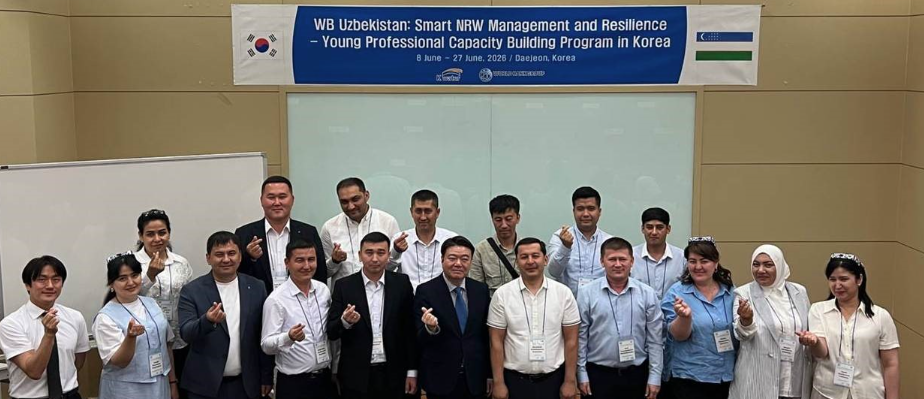
From June 8 to 27, 2026, 16 young professionals from Uzbekistan’s water utility sector participated in a three-week invitational program in the Republic of Korea. The program was implemented under the World Bank Korea Green Growth Trust Fund (KGGTF)-funded project “Uzbekistan: Smart Non-Revenue Water Management and Resilience,” with Uzsuvtaminot JSC as the beneficiary and K-water Academy as the implementing institution.
The Korea program was Step 3 of a five-step Young Professional Program. It followed online training and participant selection in January 2026 and self-directed learning from April to May 2026. Forty Uzsuvtaminot employees participated in the initial online program, from which 16 participants were selected for the Korea program. The selected participants represented administration, civil engineering, electrical engineering, environmental engineering, information and communication technology, and mechanical engineering.
The program combined technical lectures, field visits, multi-day internship-style learning, Project Concept Paper workshops, expert mentoring, group discussions, and networking with K-water staff. It was designed to strengthen participants’ understanding of Korea’s institutional frameworks and technologies in water supply and sanitation and to connect technical learning with issues relevant to Uzbekistan’s water sector.
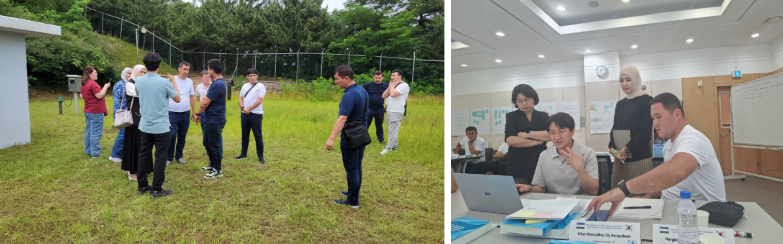
Technical Learning and Field Experience
The technical sessions covered Korea’s water supply policy and tariff system, wastewater treatment and water reuse, integrated water resources management, smart water network management, district metered area establishment and operation, apparent loss management and water balance analysis, supervisory control and data acquisition systems, non-revenue water improvement, pipeline leak detection, crisis response for water distribution networks, and smart water management technology.
Participants visited K-water facilities including the Water Management Operations Center, Groundwater Exhibition Center, Daecheong Dam, Regional Water Support Center, Water Treatment Demonstration Plant, and Water Distribution Network Training Center. The visits connected classroom sessions with water management systems, treatment processes, water distribution network operations, and practical leak detection training.
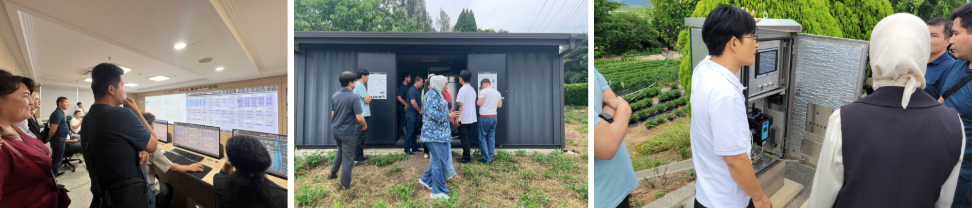
A central feature of the program was the shift from short site visits to multi-day, internship-style learning at three K-water field branches. At the Asan Water Environment Center, participants examined facility and organizational management, mechanical and electrical system operation, water treatment processes, and communication facilities. At Gosan Water Treatment Plant, they learned about facility management, water treatment and communication systems, and control-room functions, including AI-driven autonomous operation and energy and power management systems. At Seosan Water Center, the program covered the local water district and tariff system, Seosan City’s local water supply project, and the integrated operation system. Field visits also introduced a microfiltration system, rechlorination facilities, automatic water quality monitoring, and an automatic drain system.

Applying the Learning through Project Concept Papers
Four Project Concept Paper workshops were held throughout the program. Participants were organized into four thematic groups focusing on smart non-revenue water and digital water; water quality and treatment operations; water supply infrastructure; and institutional and human resources management. A professional facilitator provided writing coaching, and four K-water experts mentored the groups in their respective thematic areas.
The workshops progressed from action planning and initial concept development to coaching, mid-point review, final drafting, and presentation preparation. This structure enabled participants to use observations from the lectures and field activities when developing project concepts. On June 26, the four groups delivered final presentations and received feedback from experts before the closing ceremony.
Key Learnings and Next Steps
The program demonstrated the value of combining institutional and technical instruction with extended exposure to day-to-day water facility operations. The internship-style format allowed participants to examine not only individual technologies, but also the organizational arrangements, operational processes, and technical systems that support water supply and treatment services. Linking field learning with mentored project development also provided a structured way for participants to consider how the knowledge gained in Korea could be applied to challenges in Uzbekistan’s water sector.
The program also supported working-level exchange among participants, K-water mentors, K-water Academy specialists, and field branch staff. Following the Korea program, Step 4 is planned as an exchange visit to Uzbekistan, tentatively scheduled for September-October 2026, during which participants are expected to present their finalized group action plans. Step 5 will include the program wrap-up, final report, and sharing of outcomes by December 2026.