
By: Ngao Mubanga, Senior Environmental Specialist; Julieta Calcopietro, Junior Professional Associate; Aminu Osman, Consultant; and Marcelo Acerbi, Lead Environmental Specialist
Ghana is home to 6.4 million hectares of forest, stretching across 10 of its 16 regions, from the dense closed-canopy zones of the Western Region to the shea woodlands of the Northern Savannah Zone. About one in five Ghanaians, approximately 6.6 million people, depend on that forest for food, medicine, or income.
The forest, for most, is simply where life happens. It is the shea a mother sells at market, the fuelwood that cooks the evening meal, the timber that becomes a roof.
Yet Ghana loses roughly 14,540 hectares of natural forest every year to illegal mining, agricultural encroachment, and fuelwood dependence on which 80% of rural households still rely. And the value that could be built from what is harvested departs with every unprocessed log — a measure not of forest lost, but of value left uncaptured.
What Korea Built and What Ghana Saw
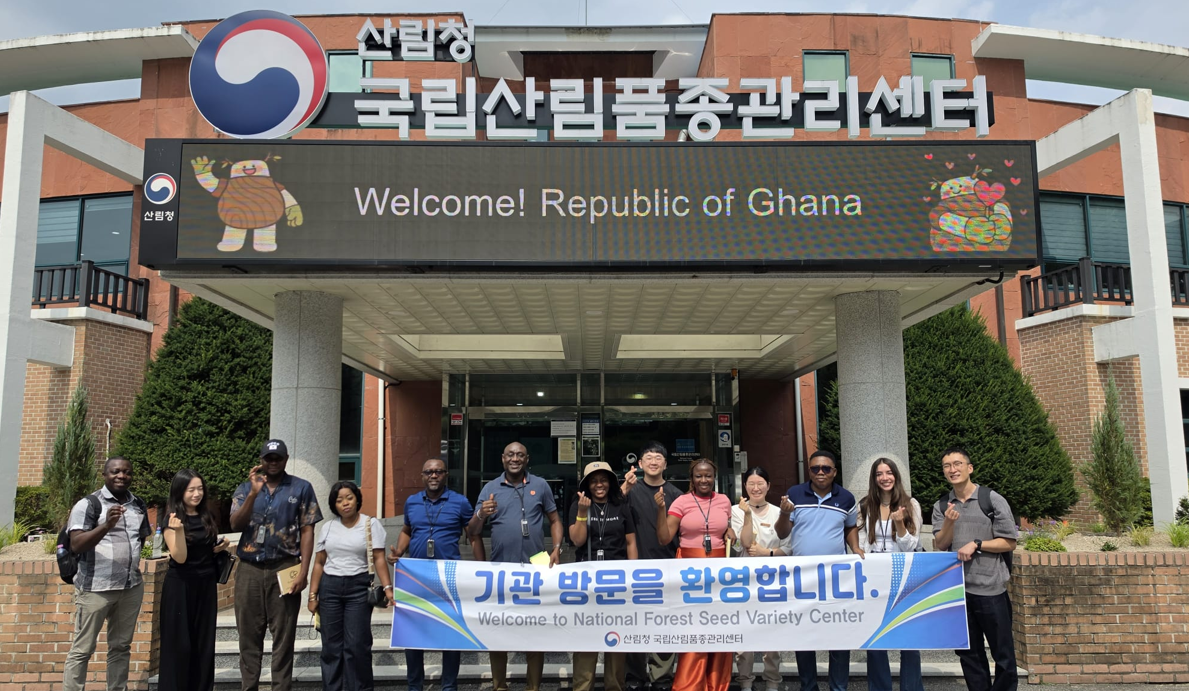
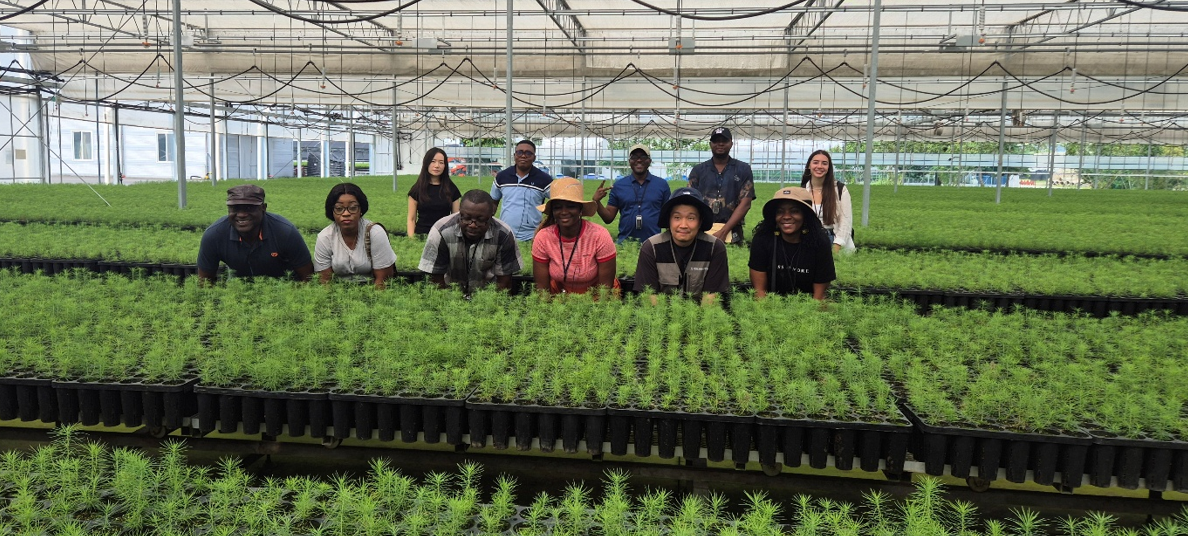
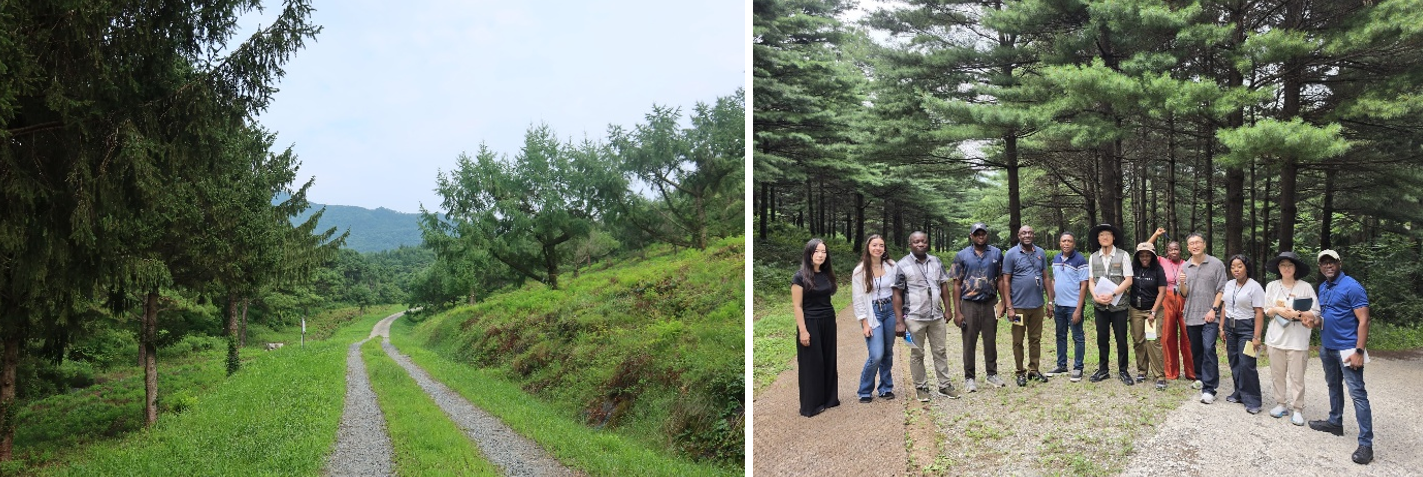
In late July 2026, a Ghanaian delegation traveled to the Republic of Korea for a Knowledge Exchange, hosted by the Korea Forestry Promotion Institute (KOFPI) and supported by the Korean Green Growth Trust Fund (KGGTF). Over five days, they visited tree nurseries and seed variety centers, timber processing and engineered wood factories, forest research and digital monitoring facilities, and a community-managed healing forest — a cross-section of what Korea's forest economy looks like today. There, they encountered a story that reframed what Ghana's own forests could become.
Korea's forest story begins in the 1960s, when decades of war, the division of the peninsula, and the pressures of a rapidly growing population had left much of the country's land degraded and its forests depleted. The National Forest Rehabilitation Program, launched in 1973, set out to restore one million hectares and was completed four years ahead of schedule. Today, Korea is more than 60 percent forested, with growing stock 14.7 times what it was in 1963.
What the delegation saw across those five days was what that commitment had made possible.
A Model Built on Patience and Policy
The lesson was not technology or a technique. It was a mindset. The forests planted decades ago are the ones paying dividends today.
Korea's restoration was a national undertaking — government, communities, and citizens planting trees together, year after year, sustained across political cycles, embedded in law, and built to last. The jobs, the exports, the industry came later. First came the commitment, one that focused public investment where it mattered most: on research, standards, and the conditions that allowed the private sector to follow. That commitment created the conditions for everything the delegation witnessed: nurseries producing certified seedlings at industrial scale, factories turning wood residues into high-value products, communities generating income from what the forest produces beyond timber.
That mindset is what Ghana is now working to replicate. Commit to the forest, build the resource base, and build the economy on top of it. The Ghanaian team shared their concept note for a proposed Ghana Forest Economy Program with the Korean team. The program projects 395,000 direct jobs over ten years — 672,000 when indirect and induced employment are counted — and the restoration of 250,000 hectares. Korea's experience suggests those ambitions are not wishful thinking. They are what a sustained national commitment to forests, done right, can deliver.
The Value That Stays
That commitment is the thread that runs through every lesson the delegation brought home.
- Science and standards as a prerequisite for value addition. Certified seeds, accredited timber testing, and national quality standards are what allow forest products to reach premium markets. A forest economy built on verified quality is one that buyers trust and markets reward.
- The raw material for a domestic industry already exists. A wood residue assessment across Ghana's existing processing facilities could be the starting point for a domestic engineered wood industry, capturing value from material that is currently underused.
- Public investment that de-risks private capital. Government's role is to fund research, set standards, and provide extension services that give private investors the confidence to enter the forest economy.
- Communities at the center. Ghana's CREMAs provide a ready platform for forest-based ecotourism and wellness enterprises that generate income without extraction.
- Jobs for women and youth by design. Ghana has already set ambitious targets for female and youth employment in its forest economy. Reaching those groups means building in the right instruments from the outset through financing windows, mentorship programs, and pathways for young entrepreneurs to enter the green economy.
From Learning to Building
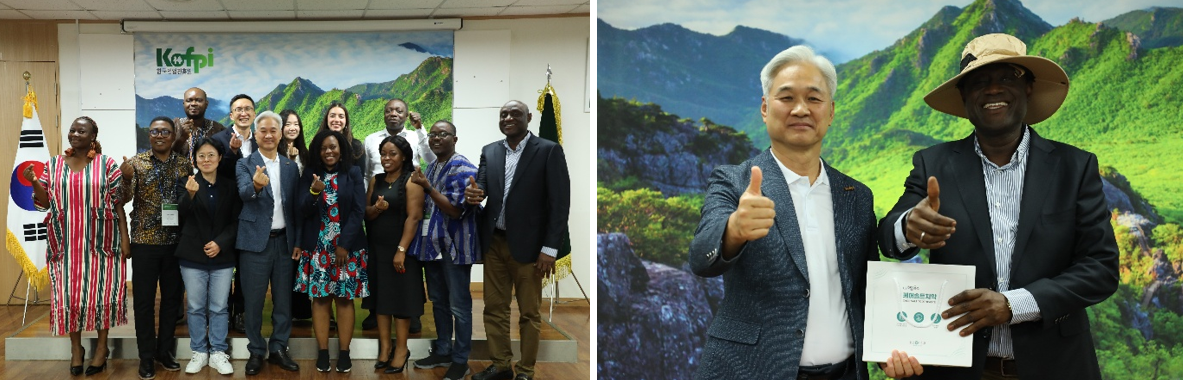
The knowledge exchange was a journey through both the past and the present of Korea's forest sector — from degraded landscapes restored through decades of national commitment, to a modern forest economy built on sustainable management, productive value chains, and community participation. What Korea demonstrated is that when those pieces come together, the forest and the people who depend on it can both thrive.
A reforested hillside, a busier sawmill, a shea cooperative with a steadier income. That is what the exchange was ultimately about — and what Ghana is working to make real: forests managed not only as vital ecological assets, but also as productive economic assets, generating jobs, supporting local enterprises, and strengthening value chains for the communities who depend on them.
One of the Korean hosts captured it simply: "Seeding is a promise; a mature tree is a legacy”. For Ghana, the work now is to make good on that promise. A standing forest. A growing economy. Communities at the center of both.
.....................
This blog draws on a Knowledge Exchange between Ghana’s Forestry Commission, Ministry of Lands and Natural Resources, Ministry of Finance, and the Korea Forestry Promotion Institute (KOFPI), held in the Republic of Korea in July 2026, supported by the Korean Green Growth Trust Fund (KGGTF) and the World Bank's Environment Department (SAWEO).