
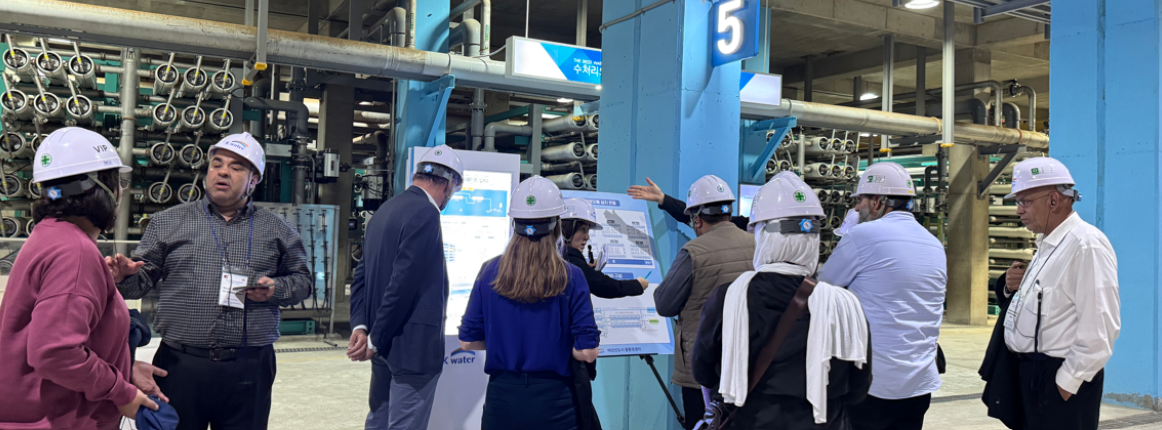
The Zarqa River Basin Environmental Rehabilitation and Development Initiative – Knowledge Exchange (KE) Program was organized jointly by the World Bank and K-water from October 13 to 17, 2025, with funding support from the Korea Green Growth Trust Fund (KGGTF). The program aimed to support the Government of Jordan—particularly the Ministry of Environment and the Ministry of Water and Irrigation—in strengthening technical and institutional capacity for the rehabilitation of the Zarqa River Basin. Through a week-long series of lectures, field visits, and technical discussions, participants explored Korea’s integrated water resources management systems, wastewater reuse technologies, and green urban development practices, gaining practical insights applicable to Jordan’s river basin restoration efforts.
The program opened at K-water Headquarters in Daejeon, where the Jordanian delegation participated in the opening ceremony and an introductory orientation on Korea’s water management framework. Senior officials from K-water presented Korea’s experience transitioning from infrastructure-driven development to an integrated, climate-resilient water resources management system. Technical sessions provided an overview of Korea’s Integrated Water Resources Management (IWRM) framework, including national-level coordination among agencies, drought and flood forecasting, and real-time hydrological monitoring. The delegation also visited the National Drought Information Analysis Center, where experts demonstrated the use of data analytics and satellite-based systems for adaptive water resource operation.
Later the same day, participants toured the Daejeon Environmental Resource Center operated by the Daejeon City Corporation. The facility exemplifies Korea’s circular economy in practice, converting household waste and food residue into renewable energy. The delegation observed the entire process—from waste collection to energy generation—highlighting how local governments integrate solid waste management and water resource policies.
The following day focused on policy and technological innovation in wastewater reuse and water industry development. At K-water’s main campus, experts presented Korea’s Water Resources Management Policy and Strategy, emphasizing institutional realignment under the Ministry of Environment and the importance of policy coherence between urban water supply, wastewater reuse, and flood control. Subsequent sessions explored advanced membrane bioreactor (MBR) and reverse osmosis (RO) applications for water reclamation, and K-water’s incubation programs supporting small and medium enterprises in the water industry.
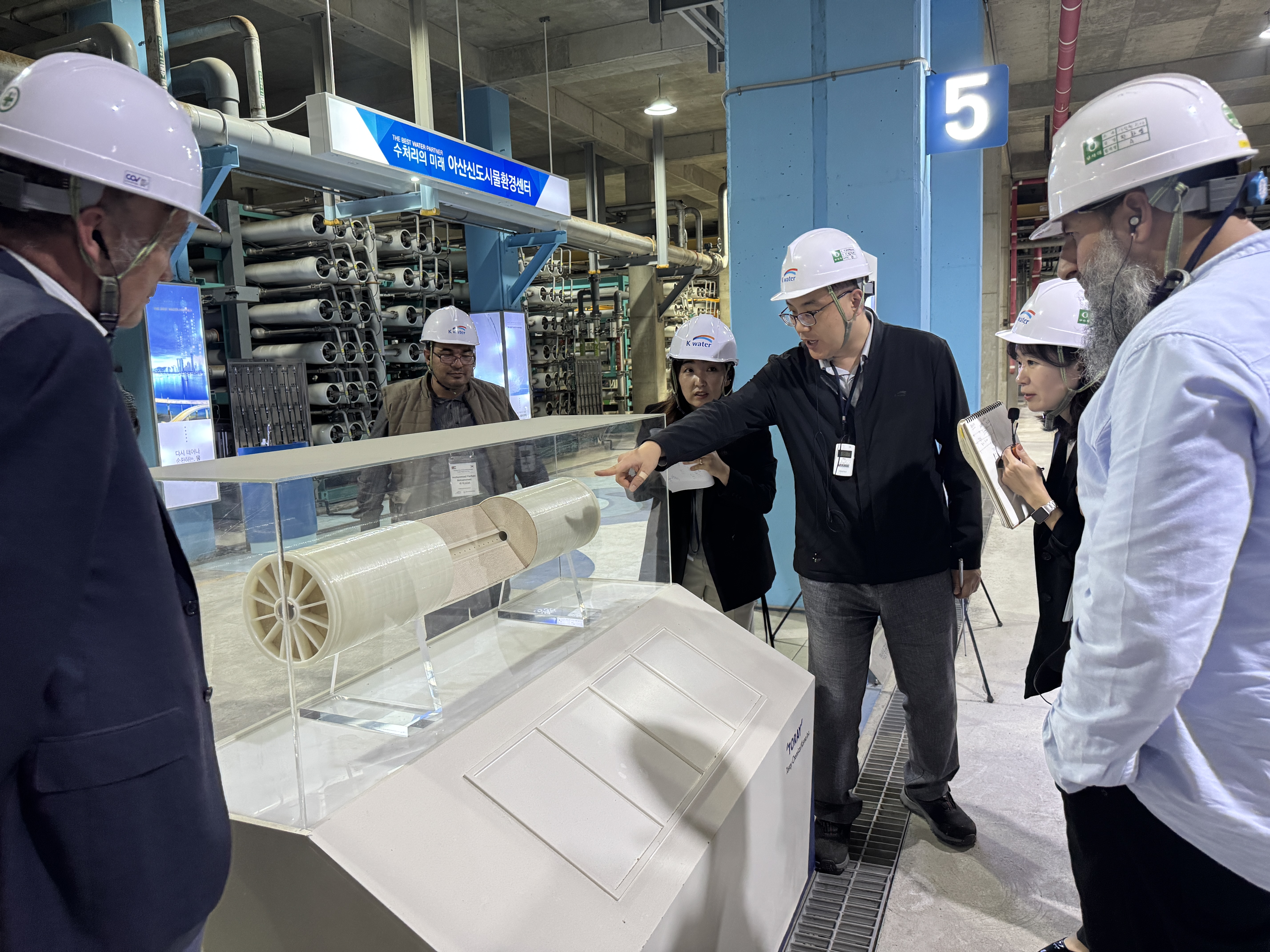
In the afternoon, the delegation visited the Asan New City Sewage Treatment and Reuse Center, a model project operated under a long-term public–private partnership (PPP). The facility treats approximately 45,000 cubic meters of wastewater per day and reuses more than half through MBR and RO systems, providing high-quality reclaimed water to industrial clients such as Samsung Display. The visit illustrated how technology, public investment, and private sector participation jointly contribute to sustainable urban water management.
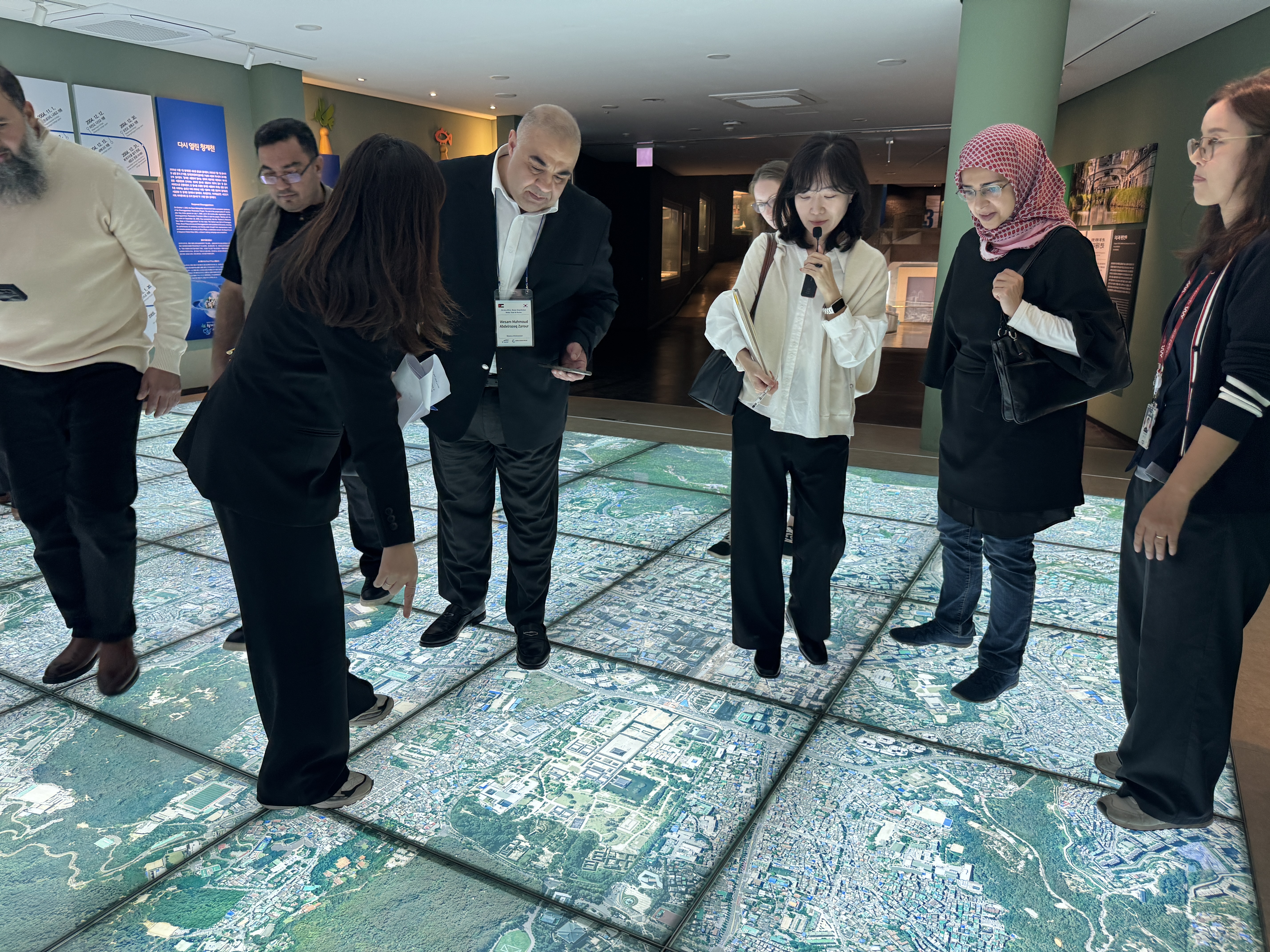
On the third day, participants traveled to Songsan Green City in Hwaseong, a flagship project demonstrating K-water’s integrated approach to smart and green urban development. Experts introduced how smart water grids, reservoir networks, and coastal management systems are combined to enhance urban climate resilience. In the afternoon, the delegation visited the Cheonggyecheon Museum and toured the restored Cheonggyecheon Stream in downtown Seoul. Once a covered highway, the stream has been revitalized into a public ecological corridor and flood management asset. The visit highlighted how nature-based solutions can simultaneously improve urban livability, microclimate, and tourism.
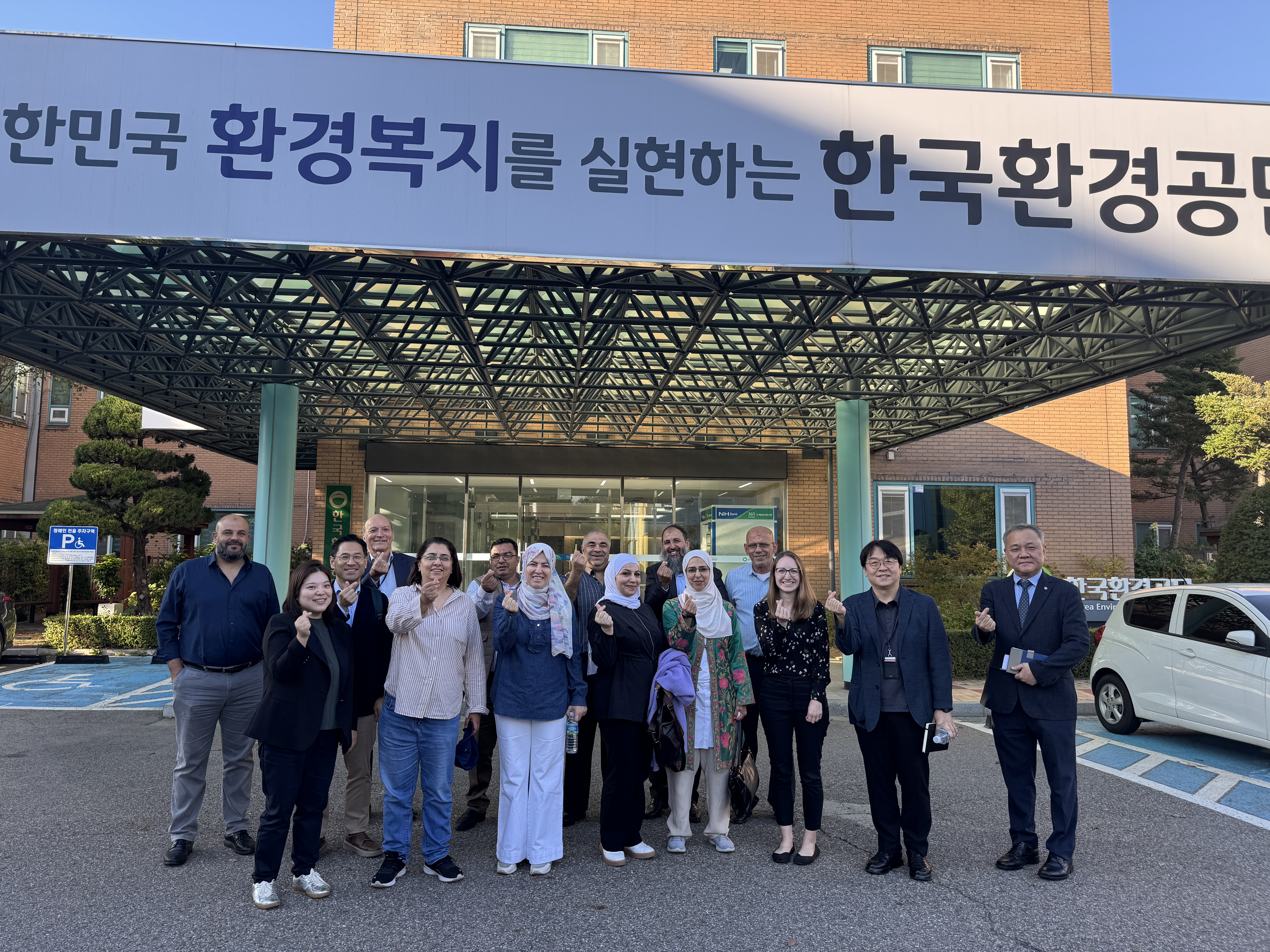
The fourth day addressed circular economy practices and basin-scale environmental management. The delegation visited the Sudokwon Landfill Corporation (SLC) in Incheon, where landfill gas and leachate are converted into renewable energy and recycled water. The site illustrated how Korea integrates waste treatment and energy recovery as part of national low-carbon strategies. This was followed by a meeting at K-eco (Korea Environment Corporation), focusing on national sewerage network management, air quality monitoring, and waste recycling systems. K-eco experts demonstrated how digital infrastructure and environmental databases support real-time water quality and pollution control at the river-basin level.
In the afternoon, the group observed waterfront regeneration projects along the Ara Waterway and the Gimpo urban waterfront, managed by K-water. Professor Seungho Lee explained the development of the Ara Waterway and waterfront, and these projects showcased the intersection of flood management, green urban design, and community revitalization.
The final day began with a wrap-up discussion in Seoul, where participants reflected on lessons from the week and identified potential applications for the Zarqa River Basin rehabilitation plan. Key takeaways included the importance of inter-agency coordination, transparent data management, and community participation in water governance. Participants emphasized that Korea’s success stems from its long-term commitment to integrating environmental, industrial, and social dimensions within a single management framework.
Grant: Restoration and Development Program for Jordan's Zarqa River Basin
Grant Year: Year 11 (2023)
TTLs: Frank Van Woerden, Lead Environmental Engineer, and Phoebe Girouard Spencer, Environment Specialist
K-Partners: Korea Water Resources Corporation (K-Water), Korea Environment Corporation (K-eco)