
By: Dorte Verner, Lead Agriculture Economist and Kitty Halpern, KGGTF Consultant
Food. Feed. Fertilizer. Waste Recovery. Jobs. Resilience.
Across Africa, food insecurity, degraded soils, and mounting waste are converging into a complex crisis. But a small, often overlooked solution is taking flight—insect farming.
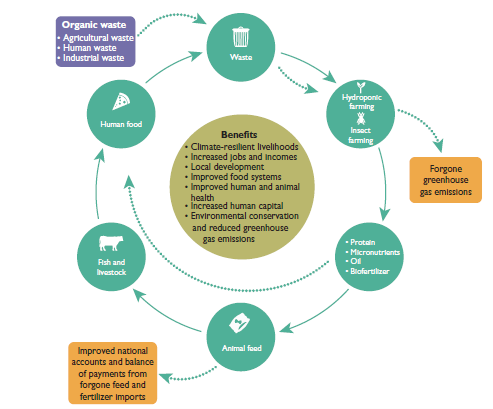
With support from the Korea Green Growth Trust Fund (KGGTF) and technical expertise from Korea’s Rural Development Administration (RDA), the World Bank’s Insect Farming for Food and Feed for a Circular Green Growth Economy (IF4FF) initiative is helping African countries turn today’s organic waste into tomorrow’s nutrition, fertilizer, jobs—and climate resilience.
"My dream is for Africa to become a leader in insect farming."
— Dorte Verner, Senior Agriculture Economist, World Bank
Insects: A Time-Tested, Future-Ready Superfood
Insects are not new to the human diet. For millennia, communities around the world—from rural Africa to urban Asia—have relied on insects as part of their traditional cuisine. Whether added to porridge to boost protein, ground into flour for baking, or enjoyed whole on a stick or in a taco with guacamole, edible insects are an accessible, healthy, and culturally accepted food source.
In Africa, most insects have historically been harvested from the wild. But now, with modern innovations like vertical insect farms, countries have an opportunity to scale production, reduce dependence on imports, and build a full circular economy—from waste recovery to protein production.
1. Food: Nutritious and Sustainable Protein for People
Processed into insect flour, these proteins can be seamlessly integrated into everyday meals such as:
-
Pasta and baked goods
-
Fortified porridge
-
Protein bars and snack foods
-
Chocolate and cereals
Insects provide high levels of protein, iron, zinc, and other micronutrients—essential for improving child nutrition, boosting maternal health, and combating hunger.
2. Feed: Greener Alternatives for Livestock and Aquaculture
Livestock, poultry, and aquaculture industries often rely on imported, environmentally damaging feedstocks like soy and fishmeal. Insects—particularly black soldier fly larvae and mealworms—can convert local organic waste into:
-
High-protein animal feed
-
Local, cost-effective solutions for farmers
-
Resilient value chains less dependent on volatile global markets
This shift saves hard currency, lowers emissions, and promotes feed security.
3. Fertilizer: Closing the Loop with Frass
The byproduct of insect digestion—known as frass—is a natural, nutrient-rich fertilizer that helps rebuild soil health. In fragile and resource-constrained settings, this organic fertilizer:
-
Boosts crop productivity
-
Reduces reliance on expensive synthetic fertilizers
-
Enhances climate resilience in degraded farmlands
In regions where fertilizer prices are volatile and difficult to plan for, frass offers a stable, local alternative.
4. Waste Management: Turning a Public Health Hazard into a Resource
One of the most revolutionary roles of insect farming is waste conversion. Insects thrive on organic materials such as:
-
Food scraps
-
Agricultural waste
-
Market waste and manure
-
Brewery and food processing waste and by-products.
This reduces landfill pressure, limits methane emissions, and prevents disease outbreaks often linked to unmanaged organic waste. Insects are natural sanitizers—converting potential hazards into valuable inputs for agriculture and food systems.
A Global Partnership with Proven Success: Lessons from Korea
South Korea offers a powerful model of what’s possible when a country takes a whole-of-government approach to insect farming. Since 2016, Korea has:
-
Recognized mealworms as edible by law
-
Established regulatory frameworks and safety standards
-
Invested in R&D, training, and financing mechanisms
-
Supported the development of entire insect-based value chains
-
Integrated insects into food, feed, cosmetics, and pet food industries
Through KGGTF support, the World Bank is leveraging Korean expertise via partnerships with:
-
Rural Development Administration (RDA)
These collaborations are powering knowledge exchange, pilot programs, capacity building, and policy development across Sub-Saharan Africa.
Toward a Green, More Circular Africa
With support from the Korea Green Growth Trust Fund, global and local partnerships, and growing demand for sustainable solutions, insect farming is emerging as a potential solution for many challenges in Africa.
Whether in rural villages, urban settlements, or refugee camps, insect farming is a simple, scalable solution that turns today's challenges into tomorrow’s opportunities.
From waste to wealth. From protein to prosperity. From micro solutions to macro impact—this is circular economy in action.