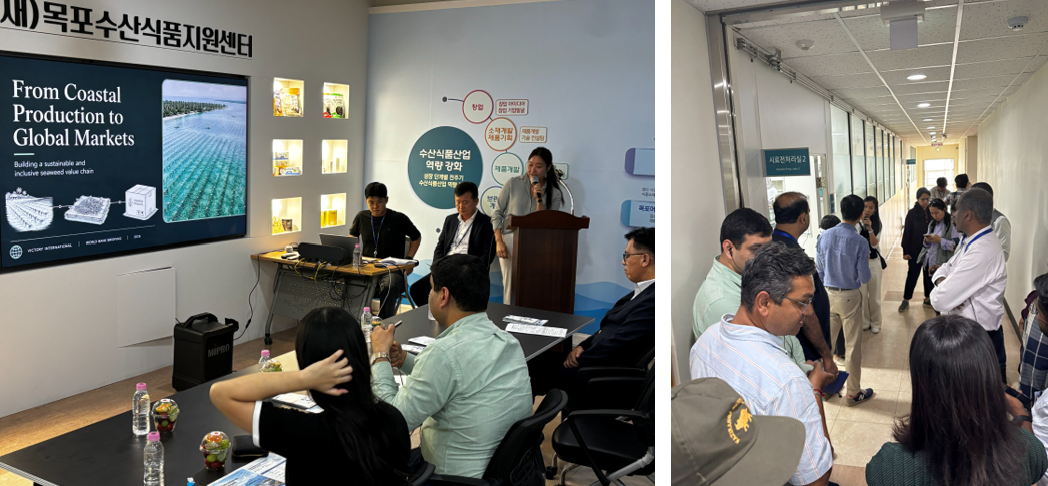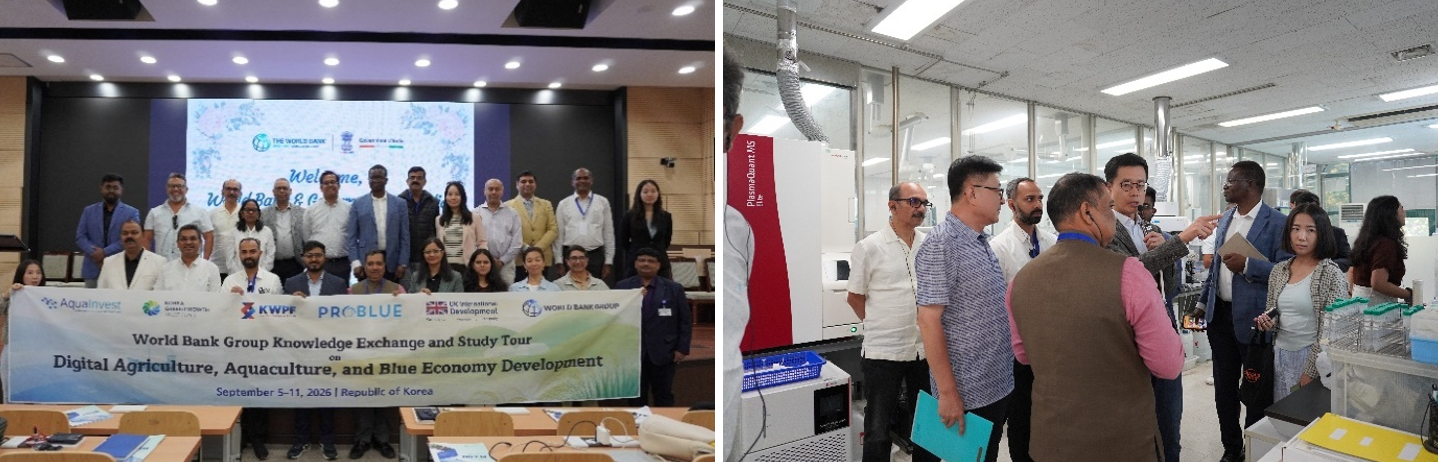
Around 30 participants from India and the World Bank joined a knowledge exchange and study tour on aquaculture, blue economy development, agribusiness, and digital agriculture. The Indian delegation included representatives from the state governments of Goa, Karnataka, Maharashtra, and Tamil Nadu, along with national and technical institutions.
Through technical sessions, institutional exchanges, and site visits, participants examined how Korea integrates research and innovation, production, processing, enterprise support, and market development across the seaweed and aquaculture value chains. The exchange also provided valuable lessons for India on strengthening research–industry linkages, adopting technology and innovation to improve productivity and sustainability, developing value-added products, supporting aquaculture enterprises and MSMEs, and building stronger market-oriented value chains that can be adapted and scaled within the Indian context.
Key Takeaways
In their concluding presentations, Indian delegates reflected on a clear and consistent message: seaweed development cannot succeed through isolated interventions — it requires a coherent, end-to-end ecosystem spanning cultivation, processing, enterprise, and markets.
Delegates identified several foundational priorities for building this ecosystem in India. These included the selection and promotion of commercially viable native species, sustained investment in breeding and hatchery programs, and ensuring a reliable seed supply chain. Equally important, they noted, are appropriate leasing and farm aggregation models, progressive mechanization, and systematic farm-level monitoring to support productivity and quality.
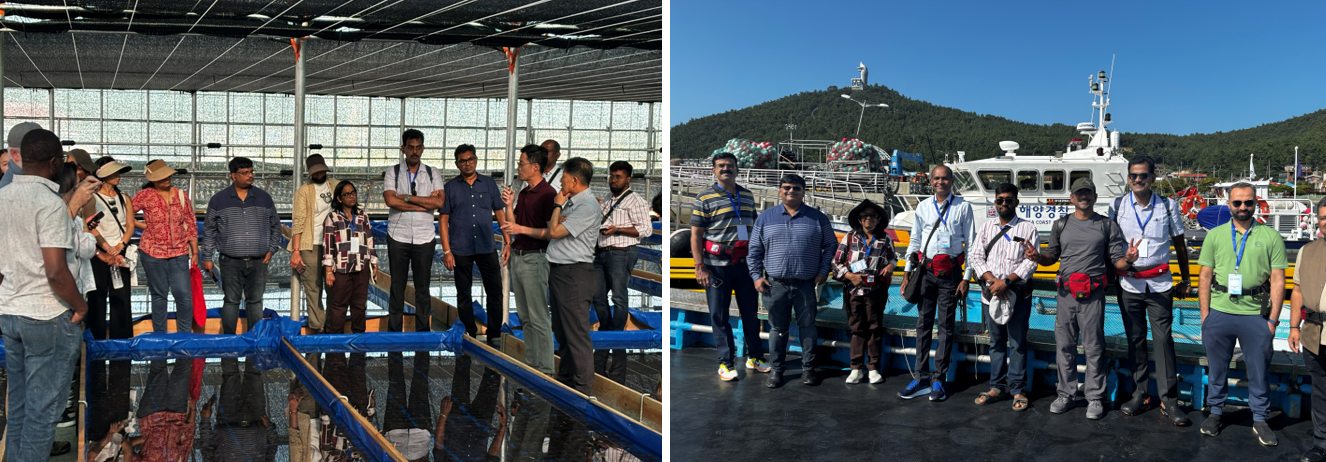
Beyond the farm gate, participants stressed the importance of connecting cultivation with shared processing and testing infrastructure, certification systems, enterprise incubation, product development, and market linkages including export pathways.
State and institutional teams saw significant potential in community-based farming clusters and coastal enterprise hubs as scalable models for inclusive growth. Practical, field-oriented farmer training was identified as essential, alongside stronger and more structured participation by cooperatives, women-led enterprises, farmer producer organizations, self-help groups, and small and medium businesses.
On the demand side, delegates pointed to a wide spectrum of opportunities across food, nutraceuticals, cosmeceuticals, pharmaceuticals, therapeutic products, sustainable packaging, and livestock feed. A particular emphasis was placed on developing edible seaweed products that are tailored to Indian tastes and grounded in domestic market demand — recognizing that consumer adoption will be as critical to sector growth as production scale.
Taken together, the exchange with Korea reinforced that a thriving seaweed economy calls for policy coherence, institutional collaboration, and investment across the full value chain — lessons that India's coastal states are now well-positioned to act upon.