
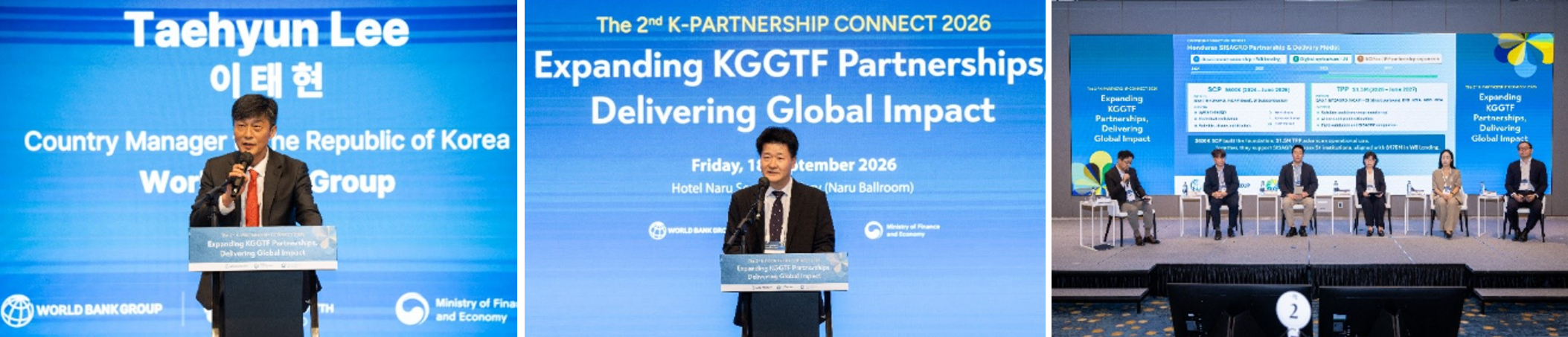
How can Korea’s expertise, technology, and financing help solve development challenges around the world?
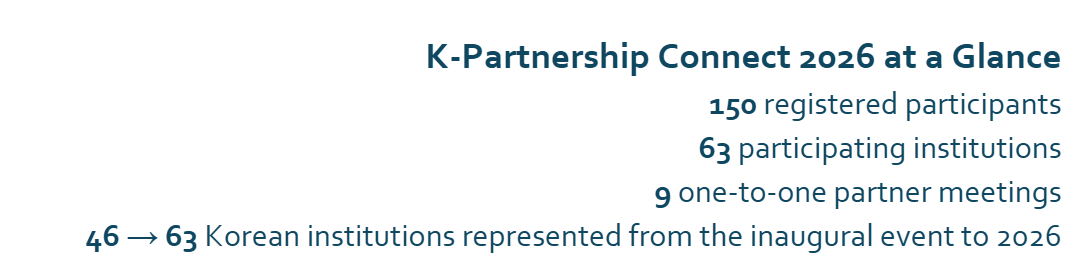
That question brought together 150 registered participants from 63 institutions in Seoul on September 18 for the second K-Partnership Connect.
Hosted by the Korea Green Growth Trust Fund (KGGTF), in partnership with the Republic of Korea’s Ministry of Finance and Economy, the event focused on moving beyond introductions to action: connecting Korean expertise with World Bank operations, creating pathways for technical collaboration, and exploring how successful partnerships can grow into larger projects and financing opportunities.
Participants represented national and local government, public agencies, universities and research institutions, private companies, international organizations, and the World Bank Group, with expertise spanning water, energy, transport, agriculture, digital technology, environment, and urban development.
What Partnership Looks Like in Practice
The Honduras experience offered a concrete example of how these connections can translate into World Bank operations.
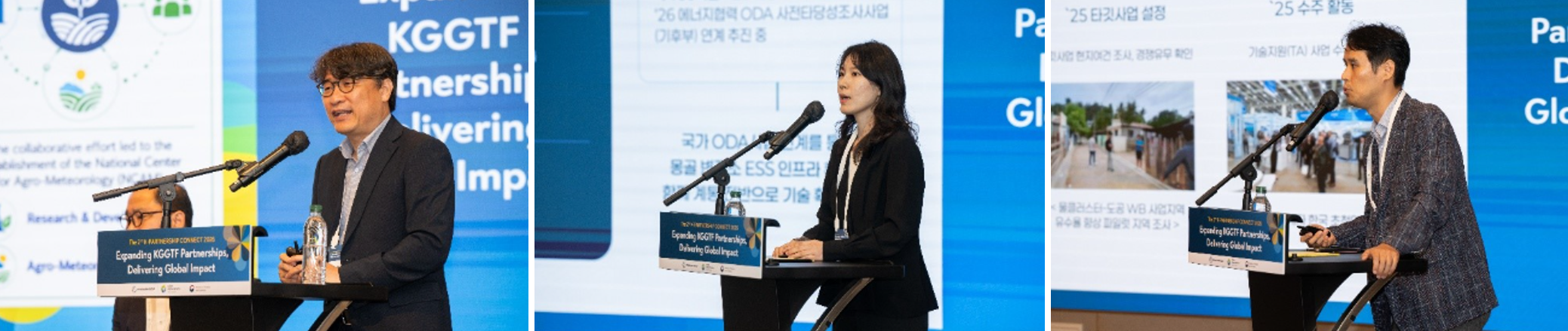
Through KGGTF-supported work, Korean expertise in agrometeorology and geospatial information is helping explore new approaches to strengthen agricultural information and decision-making in Honduras. Representatives from Seoul National University’s National Center for Agrometeorology and Geospatial Information Co. shared their experience, alongside perspectives from K-water Academy, the Korea Meteorological Institute, and Sherpa Space.
The discussion illustrated a broader pathway KGGTF is working to strengthen: a connection can lead to technical assistance; successful technical collaboration can develop into deeper institutional partnerships; and those partnerships can ultimately contribute to larger World Bank operations and complementary financing.
From Partnership to Pipeline
Other sessions explored how this progression can work across sectors.
The Korea Environment Corporation’s Korea Water Cluster shared how its collaboration with KGGTF is developing from partnership into projects, while the National Institute of Green Technology introduced financing and support platforms that could help promising collaborations move forward.
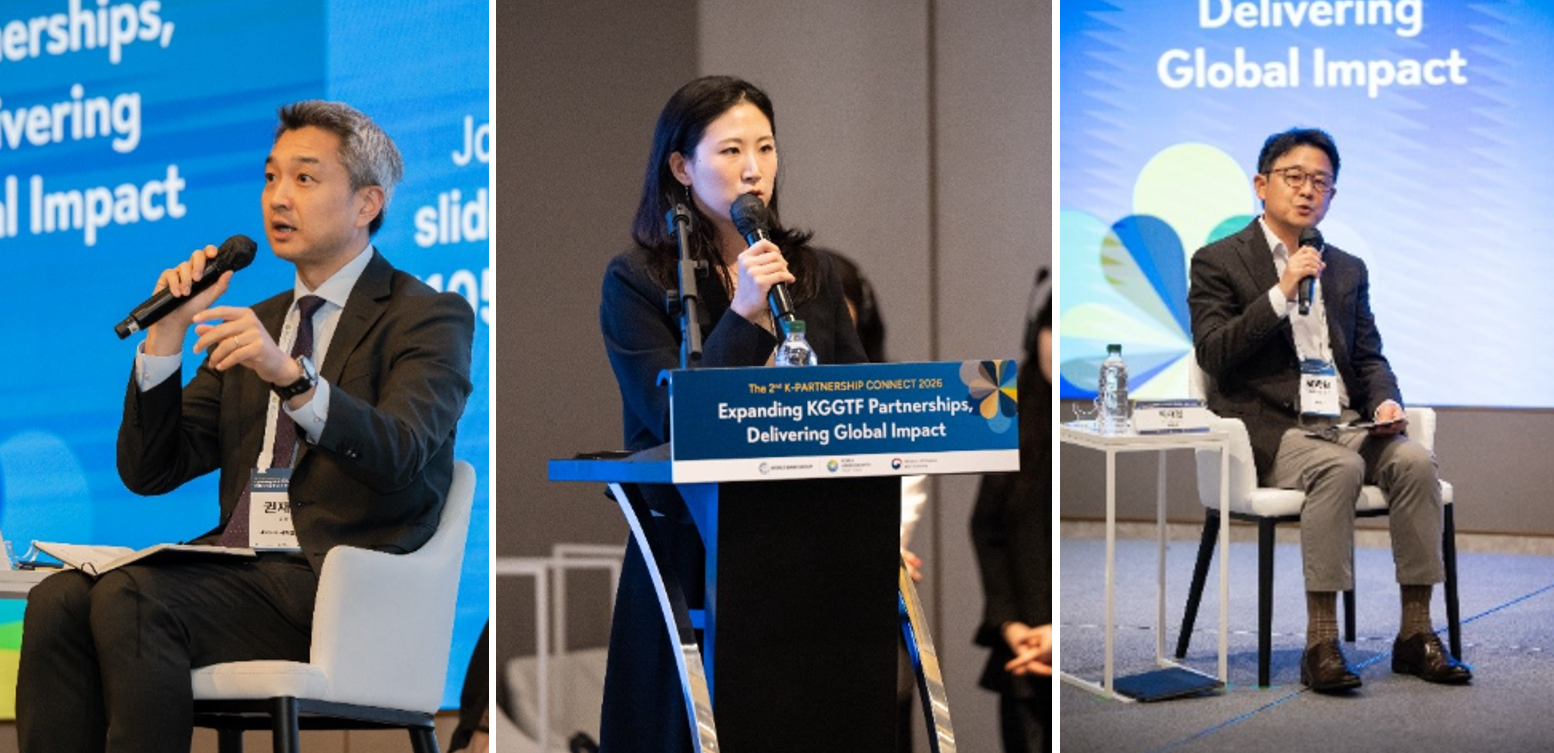
World Bank and IFC specialists also offered practical guidance on how Korean institutions and companies can engage across the World Bank Group, from contributing expertise to World Bank projects to exploring private sector opportunities through IFC.
Together, the discussions made the path from connection to collaboration to delivery more tangible, helping Korean partners better understand where their expertise can fit within World Bank operations and how promising collaborations can move towards implementation.
Making Space for Connections
Some of the most important conversations did not happen on stage.
Feedback from the inaugural K-Partnership Connect highlighted the need for more opportunities for participants to meet one another. This year, networking was therefore placed at the heart of the program.
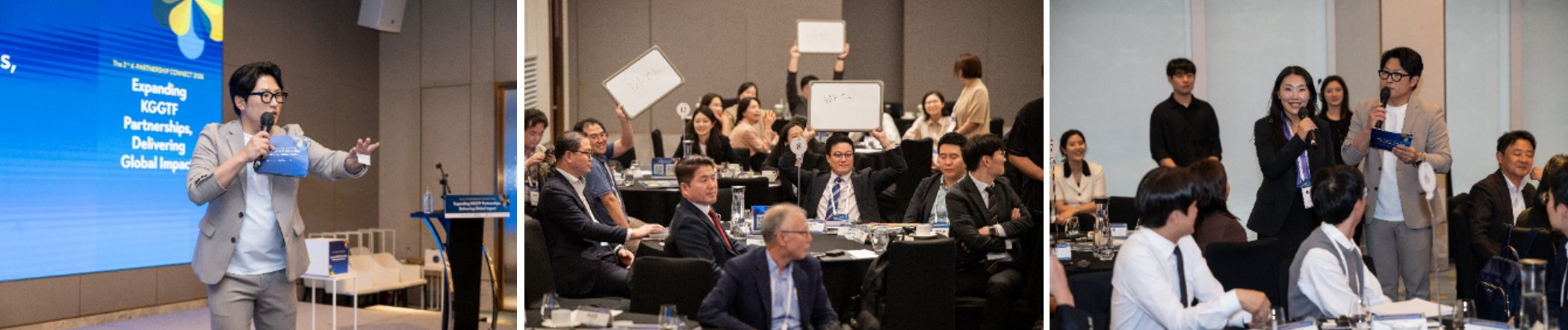
During the interactive K-Partner Connect session, quizzes, bingo activities, and facilitated conversations encouraged participants to learn more about KGGTF—and about one another. Through a mix of friendly competition and informal exchange, participants discovered shared interests, identified complementary expertise, and made new connections across institutions.
Importantly, the session was designed to encourage collaboration not only between Korean partners and World Bank teams, but also among Korean institutions themselves—creating opportunities to combine expertise, technology, and financing around common development challenges.
The afternoon concluded with live polling and small-group discussions on future partnership priorities and how KGGTF can better connect Korean organizations with World Bank opportunities.
Turning Conversations into Partnerships
Beyond the main program, KGGTF held one-to-one meetings with nine Korean partner institutions, creating space to move from broad networking to more targeted discussions.
For newer partners, the meetings introduced KGGTF’s role and explored where their expertise could contribute to World Bank operations. With existing partners, discussions focused on ongoing collaboration, emerging needs, and opportunities for deeper engagement with KGGTF and World Bank teams.
These tailored conversations helped move participants from general interest toward more focused next steps based on each institution’s expertise and stage of partnership.
The growth from 46 institutions at the inaugural K-Partnership Connect to 63 registered institutions in 2026 reflects an expanding network—and growing interest in bringing Korea’s knowledge, technology, and financing to development challenges around the world.