By: Maurice Rawlins, Senior Environmental Specialist; Felipe Lizana, Consultant; and Diego Calero, Junior Professional Associate
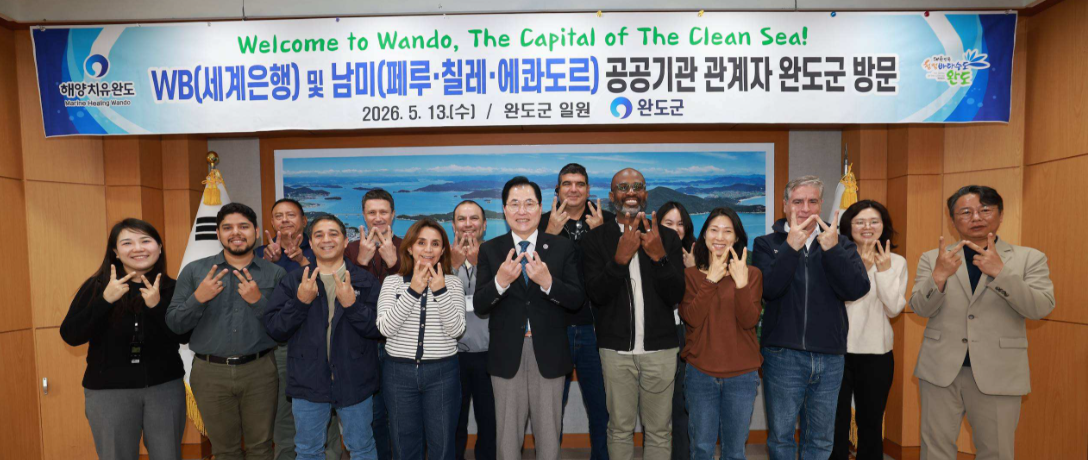
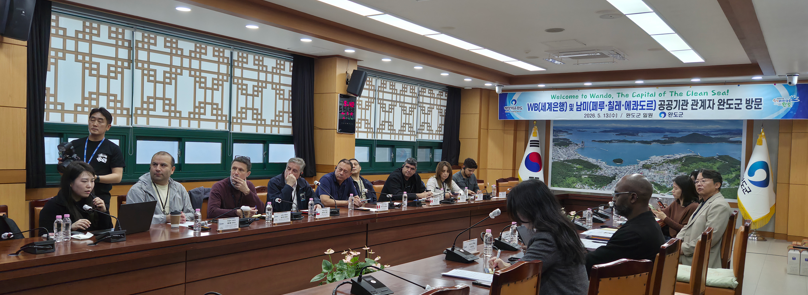
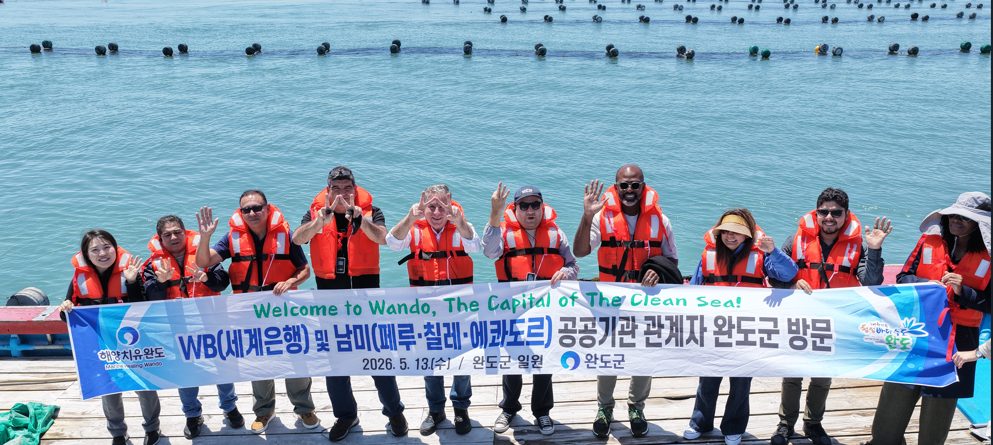
How can a traditional activity like seaweed harvesting be transformed into an industry that exports billions of dollars a year? That question led a delegation from the governments of Chile, Ecuador, and Peru, together with a World Bank team, to the coasts of South Korea.
The region has the resource. The challenge is to develop the necessary value chains to convert that potential into growth, innovation, and exports.
Chile is the largest wild seaweed harvester in Latin America, with more than 428,000 tons collected in 2024 and nearly 75,000 jobs linked to the sector. Peru is the region's second-largest exporter, with more than 50,000 tons in 2022 and a 40% increase over two years, although a significant portion of this extraction continues to take place outside formal management and control frameworks, putting pressure on its marine forests. Ecuador is just getting started, with communities cultivating Kappaphycus on a small scale. In all three cases, the pattern repeats: raw materials are exported, finished products are imported.
Since 2025, with support from the Korea Green Growth Trust Fund (KGGTF) of the Republic of Korea, the World Bank has been working with the three countries on the "Seaweed Solutions" initiative, which includes a value chain diagnosis, a roadmap for Chile, recommendations for Peru and Ecuador, and an Ecuadorian pilot using seaweed additives to reduce methane emissions from livestock.
The exchange with Korea provided a key perspective for addressing the central question: how to professionalize an industry without leaving behind those who have sustained it for centuries?
-
A Fund born from the producers
During a visit to the Korea Laver Industry Association, we observed how a collective fund is managed, financed by the producers themselves and dedicated to market promotion and quality certification. This mechanism was not born from a law, but from decades of aligned incentives among cooperatives, public science, and the State. Their experience could inspire Chile and Peru, where thousands of small producers cannot get certified on their own.
-
Seed, Research, and Entrepreneurship: The Invisible Links
At the Jeollanam-do Ocean and Fisheries Science Institute, we learned about a seed certification system that enables more stable and predictable production. At Chosun University, we observed a close relationship between research and the productive sector to develop higher value-added products, ranging from food and cosmetics to solutions for reducing livestock emissions, an area also being explored in Ecuador.
- Mitigating Risks to Attract Investment
At the National Federation of Fisheries Cooperatives (Suhyup), we learned about insurance for seaweed and shellfish farmers, co-financed by producers and the State, which protects them against disasters such as red tides. For a region exposed to phenomena like El Niño and harmful algal blooms, these types of risk management instruments are a key element in attracting financing and investment.
-
A Fourth Lesson That Explains the Others: Investment in Research
Meetings coordinated by the Korea Maritime Institute (KMI) reinforced a central idea: South Korea's seaweed industry success is the result of a long-term strategy combining investment in research, infrastructure, and institutional development. The sector's growth followed a clear sequence: first, production and seed systems were strengthened; then, processing and value-added generation were promoted; and finally, exports and the industry's international positioning were advanced.
The key message for the Region Is prioritization: Integrating Governance, Certification, and Risk Management
Meetings coordinated by the Korea Maritime Institute (KMI) reinforced another important lesson: South Korea’s seaweed industry was built through sustained investment in research, infrastructure, and institutions. Development happened in stages—first strengthening production and seed systems, then expanding processing and higher-value products, and ultimately building export markets and international competitiveness.
For the region, the lesson is to prioritize and build progressively. Rather than trying to develop every opportunity at once, countries can focus on a small number of commercially promising species, invest in applied research, and build the infrastructure and systems needed for markets to grow. Certification is also important—not only for accessing higher-value markets, but for strengthening sector standards and governance. Supporting small producers in meeting these requirements will be critical to ensuring they can participate in the industry’s growth.
The next steps are already taking shape. Chile is exploring opportunities in multi-trophic aquaculture and coastal planning; Ecuador is advancing a roadmap linking seaweed production with low-carbon livestock; and Peru is exploring a macroalgae innovation center and the formalization of its seed systems.
Korea’s experience demonstrates that a competitive seaweed industry is not built on the resource alone. It requires a strong value chain supported by effective institutions, applied research, reliable seed systems, appropriate infrastructure, and sustained investment. For Chile, Ecuador, and Peru, the opportunity now is to build those foundations systematically—creating the conditions for seaweed industries that can generate greater value, stronger businesses, and new jobs.
And watch the film below to hear what participants learned from Korea’s experience and how those lessons could unlock new opportunities across the Andes.