
As climate change intensifies and farming becomes increasingly unpredictable, countries around the world are searching for new ways to help farmers make smarter, more resilient decisions. In Kenya, where agriculture supports millions of livelihoods, strengthening access to timely, accurate agricultural information is becoming essential to improving productivity and food security.
From May 9 to 13, 2026, a 12-member delegation from Kenya—including senior representatives from the Ministry of Agriculture and Livestock Development (MoALD), the Kenya Agricultural and Livestock Research Organization (KALRO), the Kenya Agricultural Digital Information Centre (KADIC), county-level agricultural directors, and World Bank lending operation teams—traveled to the Republic of Korea for an intensive knowledge exchange on digital agriculture and soil information systems.
Supported by the Korea Green Growth Trust Fund (KGGTF), the study tour combined technical discussions, institutional exchanges, and field visits designed to generate practical insights for advancing Kenya's National Soil Information System (SIS) and broader climate-smart agriculture agenda.
For both Kenya and Korea, the challenge is increasingly similar: how can farmers navigate climate shocks, volatile markets, and growing uncertainty with better information?
The answer lies in moving beyond traditional, experience-based approaches toward data-driven agriculture. Throughout the study tour, delegates explored how Korea has built an integrated digital ecosystem that transforms soil data, satellite imagery, and scientific research into practical tools that support everyday farming decisions.
More importantly, they examined how strong institutions, public-private partnerships, and farmer engagement have enabled these technologies to deliver real-world impact.
Building the Foundation: Soil Data That Supports Better Decisions
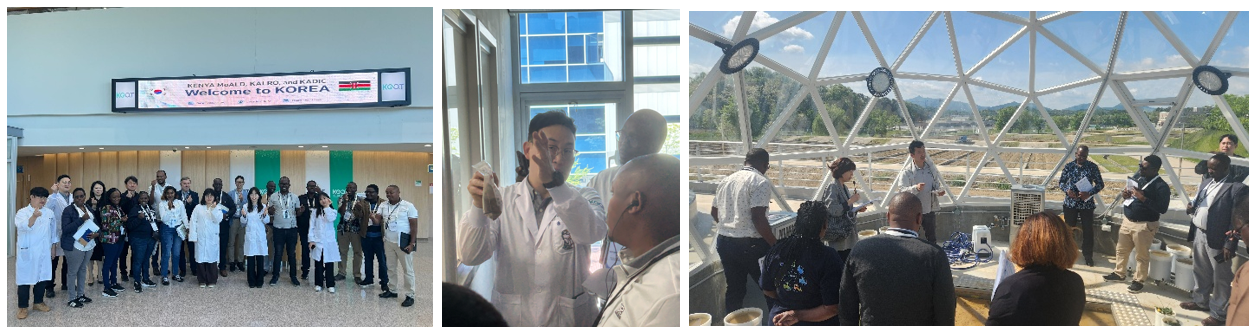
Visits to the Rural Development Administration (RDA) and the Korea Agriculture Technology Promotion Agency (KOAT) demonstrated that effective digital agriculture begins with reliable data.
At KOAT, delegates toured advanced diagnostic laboratories where scientists analyze soil and water samples to identify nutrient deficiencies while screening for contaminants such as heavy metals and chemical residues. These laboratory systems provide the evidence base needed to deliver precise recommendations on fertilizer application and soil management.
At the RDA, the delegation explored Heuktoram, Korea's national Soil Information System. Available through both web and mobile platforms, Heuktoram provides parcel-level information on soil characteristics and translates complex scientific data into practical guidance for farmers on fertilizer use, irrigation, and crop management.
"Seeing how Heuktoram places actionable soil information directly into farmers' hands was incredibly inspiring," reflected one delegate. "It showed us what is possible for Kenya's own digital soil platform."
The exchange is already generating concrete next steps. Later this year, an RDA soil scientist will travel to Nairobi to co-host a technical workshop supporting the development of Kenya's national soil information system.
From Research to Results: The Power of Partnership
At Jeonbuk National University, delegates explored how academia, local governments, and industry collaborate to accelerate agricultural innovation.
During discussions at the Smart Digital Agriculture Lab led by Professor Taegon Kim, participants learned how partnerships within the Jeonbuk Special Agri-Bio Industry District and Namwon Smart Agriculture Promotion Zone help translate research into practical solutions for farmers.
For many delegates, the experience reinforced the importance of moving beyond isolated pilot projects.
"It was inspiring to see universities, local governments, and farmer organizations working together to solve real-world problems," one participant noted. "Innovation only matters if it reaches the farmers who need it most."
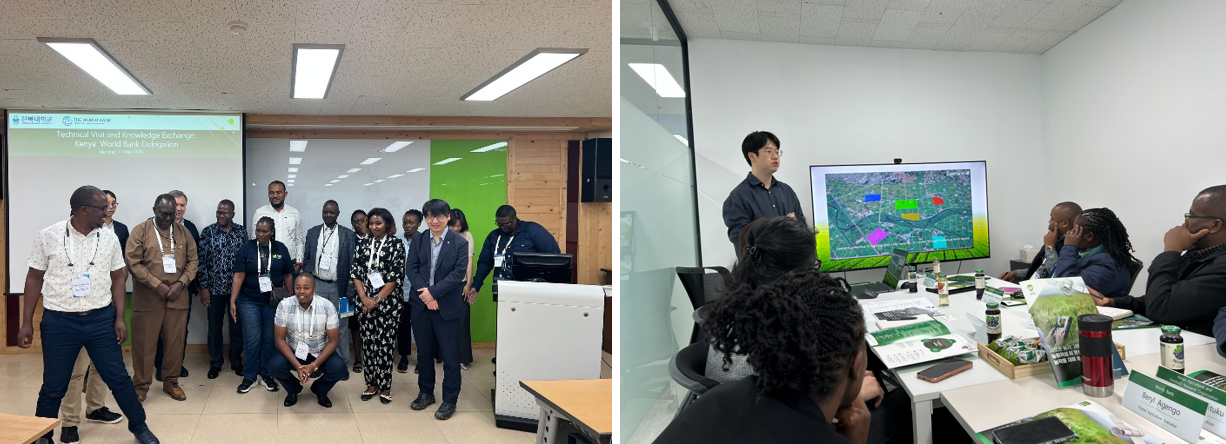
The delegation also met with Saefarm, a rapidly growing Korean ag-tech company specializing in satellite-based agricultural monitoring.
Using data collected from more than 200 satellites, Saefarm's platform analyzes crop health, soil moisture, and nutrient conditions to generate high-resolution yield predictions—often without relying on extensive ground-based sensors. The technology offers significant potential for strengthening Kenya's national planning capabilities and supporting more targeted agricultural interventions.
Thinking Beyond the System
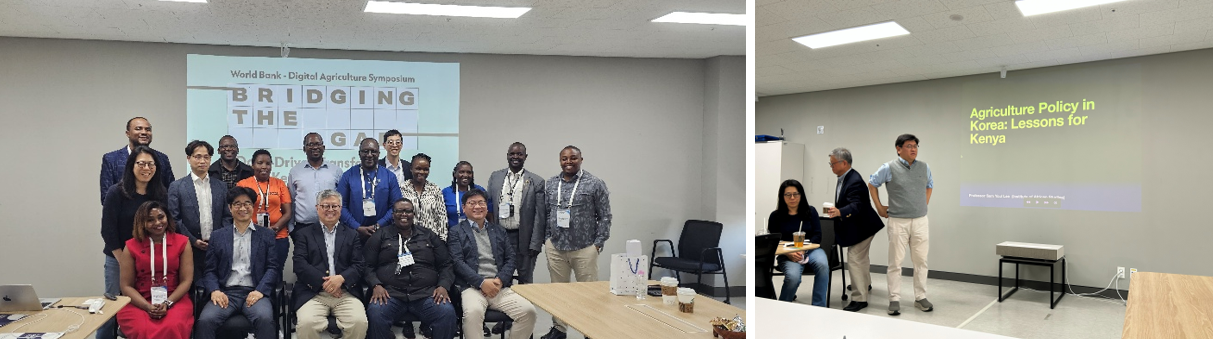
A symposium at the Institute of African Studies, Yonsei University challenged delegates to consider an important question: What makes digital agriculture platforms sustainable?
Professor Lee Sam Youl encouraged participants to "think beyond the system" itself.
He emphasized that successful platforms are not static databases but living systems that evolve through continuous learning. Farmers and extension officers must actively contribute field observations and local knowledge, creating feedback loops that improve recommendations over time.
Mr. Daehyun Ban from FarmHannong reinforced another critical lesson: technology alone is not enough.
Without strong investments in farmer education and data literacy, even the most sophisticated platforms risk going unused. Building trust, demonstrating value, and strengthening users' ability to interpret and apply information are essential for long-term success.
Unlocking Climate Finance for Agricultural Transformation
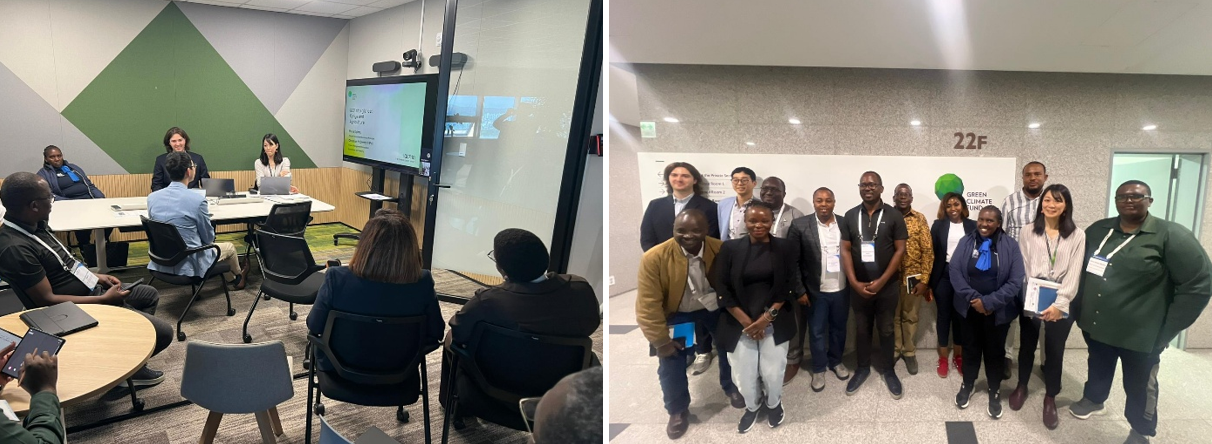
The visit to Green Climate Fund (GCF) headquarters highlighted another important dimension of Kenya's digital agriculture journey: financing.
GCF specialists shared lessons from agricultural investments across Africa and outlined the elements of successful climate finance proposals. Discussions focused particularly on blended finance approaches that combine GCF resources, World Bank lending, and domestic investments to support long-term agricultural resilience.
For the Kenyan delegation, the meetings clarified a pathway for mobilizing the resources needed to scale digital agriculture solutions nationwide while meeting ambitious climate adaptation and mitigation objectives.
Five Lessons Shaping Kenya's Digital Agriculture Strategy
- Interoperability by Design
Digital systems must overcome fragmented data landscapes through common standards that enable ministries, counties, and development partners to work together. - Data Literacy as a Foundation
Successful adoption requires investing in farmers' ability to understand, interpret, and use data to inform decision-making. - User-Centered Design
Different users require different tools—from simple, intuitive interfaces for farmers to sophisticated analytics for researchers and policymakers. - Continuous Learning Systems
Digital platforms should function as dynamic learning ecosystems that improve through regular feedback from farmers and extension services. - Blended Financing for Sustainability
Long-term success depends on combining international climate finance, development lending, and domestic resources to support ongoing operations and maintenance.
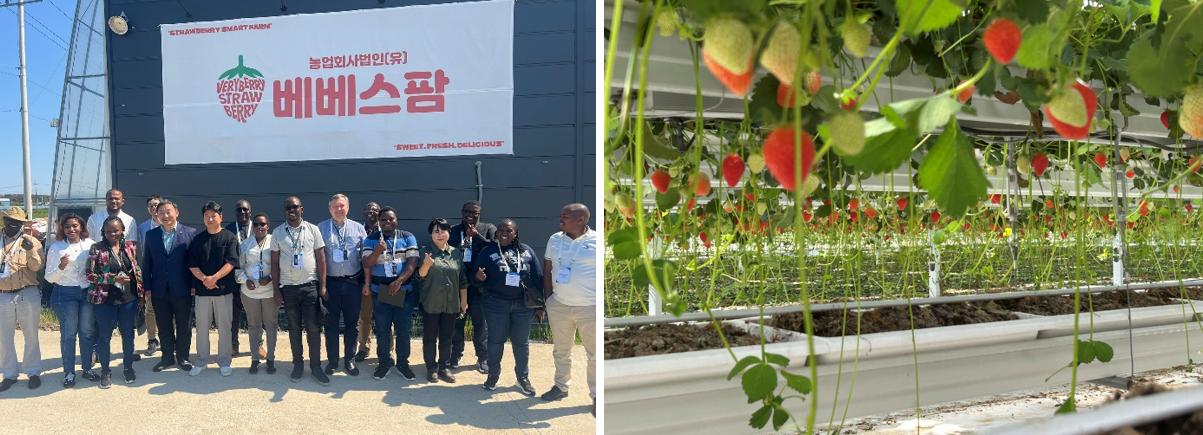
Where History Meets the Future: Our Visit to Sago!
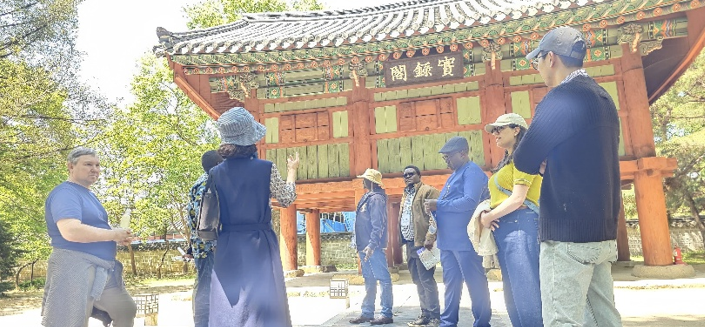
The study tour concluded with a visit to Gyeonggijeon Shrine in Jeonju, home to the Sago, the royal archives of Korea's Joseon Dynasty.
For the Kenyan delegation, the visit offered an unexpected but powerful lesson.
Centuries before cloud computing and digital databases, Korea had developed sophisticated systems for preserving and protecting critical information. Duplicate records were carefully stored across multiple locations to safeguard knowledge against disasters and ensure continuity across generations.
The parallels were striking.
Building Kenya's National Soil Information System is not simply about adopting new technologies. It is about creating a culture that values data as a strategic national asset—one that is carefully collected, protected, shared, and continuously improved.
As Kenya advances its digital agriculture agenda, the lessons from Korea demonstrate that resilient systems are built not only through innovation, but through long-term commitment to stewardship, collaboration, and learning.
The study tour marked an important step in that journey—transforming knowledge exchange into partnerships, and partnerships into action that can help strengthen climate resilience and improve livelihoods for farmers across Kenya.