For many participants, Korea Green Innovation Days (KGID) will be their first time visiting the Republic of Korea. But in many ways, Korea may already feel familiar.
Over the past decade, Korean culture has become a global force. From chart-topping K-pop groups to internationally acclaimed films and series on global streaming platforms, Korea’s creative industries have captured audiences around the world. Whether through music, television, or emerging digital content, Korea has demonstrated an ability to shape global trends while staying rooted in its identity.
This cultural influence is not accidental. It reflects the same underlying drivers that shaped Korea’s broader development story: long-term investment in talent, strong institutions, and a deliberate strategy to compete and innovate globally.
That same story extends far beyond entertainment.
For those arriving in Korea for KGID in early May 2026, the visit offers something deeper: a chance to see, up close, how a country has navigated one of the most significant development transformations of the past century, and what lessons that journey holds today.
Korea’s starting point is well known. In the years following the Korean War, the country faced widespread poverty, damaged infrastructure, and limited industrial capacity. What followed was not a single breakthrough moment, but a sustained process of building.

Education was prioritized early. Institutions were strengthened. Industrial policies supported learning and competitiveness. Infrastructure investments were sequenced to unlock growth. Over time, these choices are compounded.
Today, that trajectory is visible in Korea’s globally integrated economy and advanced technology ecosystem. Companies such as Samsung, Hyundai Motor Company, and LG are often seen as symbols of this success. But behind them sits something more important: a system shaped by coordinated policy, institutional discipline, and continuous adaptation.
What makes Korea’s experience especially relevant today is not that it can be replicated directly, but that it offers practical insight into how countries can align policy, investment, and capacity over time—and how to move from ambition to implementation.
That is also why Korea’s role in global development has evolved.
Having once been a recipient of international support, including from the World Bank, Korea is now an active donor and partner. It brings not only financing, but also something equally valuable: tested experience in how to design reforms, build institutions, and scale what works.
The Korea Green Growth Trust Fund (KGGTF) sits at the center of this exchange. By connecting World Bank teams with Korean expertise and targeted grant financing, KGGTF helps countries pilot new approaches, from digital agriculture to resilient infrastructure, and embed those lessons into larger investment operations.
And it is in Korea itself that this exchange becomes most tangible.
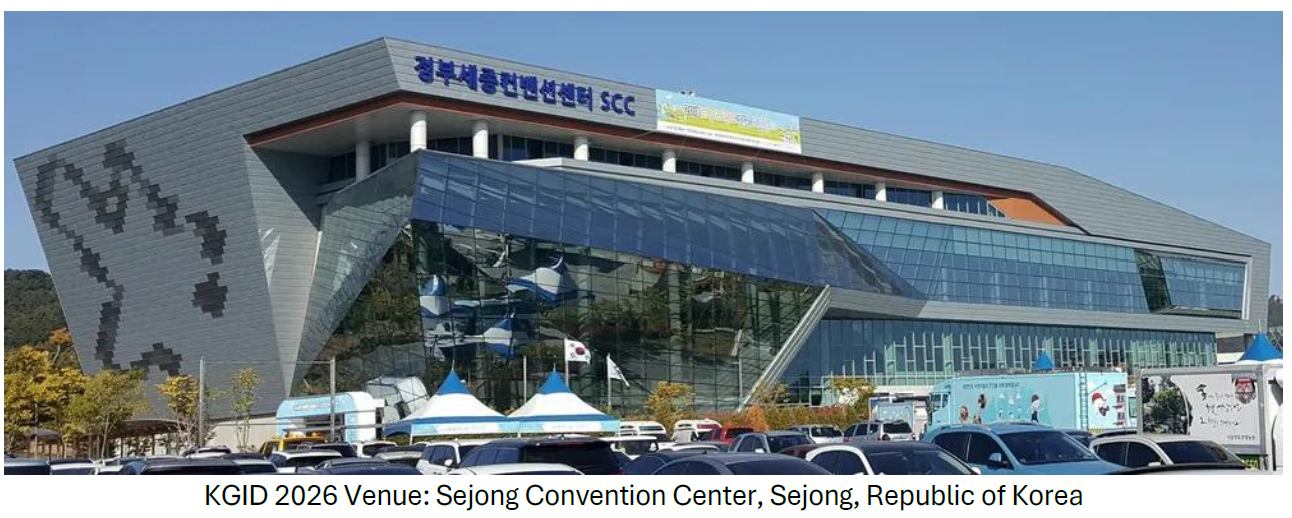
Sejong: A Living Example of Planning in Practice
This year’s KGID, taking place in early May 2026, will be hosted in Sejong Special Self-Governing City, a place that reflects many of the same principles that shaped Korea’s development journey.
Established in 2012, Sejong was designed as part of a national effort to rebalance growth away from Seoul and bring government functions closer together. Today, it hosts more than forty ministries and national agencies, including the Ministry of Economy and Finance, a key partner in Korea’s development cooperation.
But Sejong is more than an administrative center. It is, in many ways, a living model of integrated planning.
Because the city was built recently, its design reflects contemporary priorities. Government complexes are connected to residential areas, public transport, and green spaces. Parks, cycling paths, and a central lake are embedded into the city’s structure, not added later.
At the same time, Sejong serves as a platform for innovation, including smart-city technologies and digital governance systems.
For KGID participants, this offers something practical. Not just discussions about policy, but a chance to see how those ideas translate into real systems, how planning, infrastructure, and governance intersect on the ground.
Learning by Seeing, Scaling by Doing
Korea’s development story is still evolving. That may be the most important takeaway.
The country continues to adapt through investments in digital infrastructure, green growth strategies, and new models of urban development. At the same time, it is sharing these experiences through partnerships that emphasize learning, adaptation, and long-term impact.
Korea Green Innovation Days is part of that process.
As participants gather in Sejong in early May 2026, the value lies not only in the sessions and discussions, but in the exchange itself: what can be learned, what can be adapted, and how different countries can take elements of these experiences and apply them in their own contexts.
Because ultimately, what works is not about copying a model. It is about understanding the building blocks—and how to apply them, step by step, in different settings. We look forward to seeing you soon.