
By: Tongkyu Kim, KGGTF 2026 Youth Intern
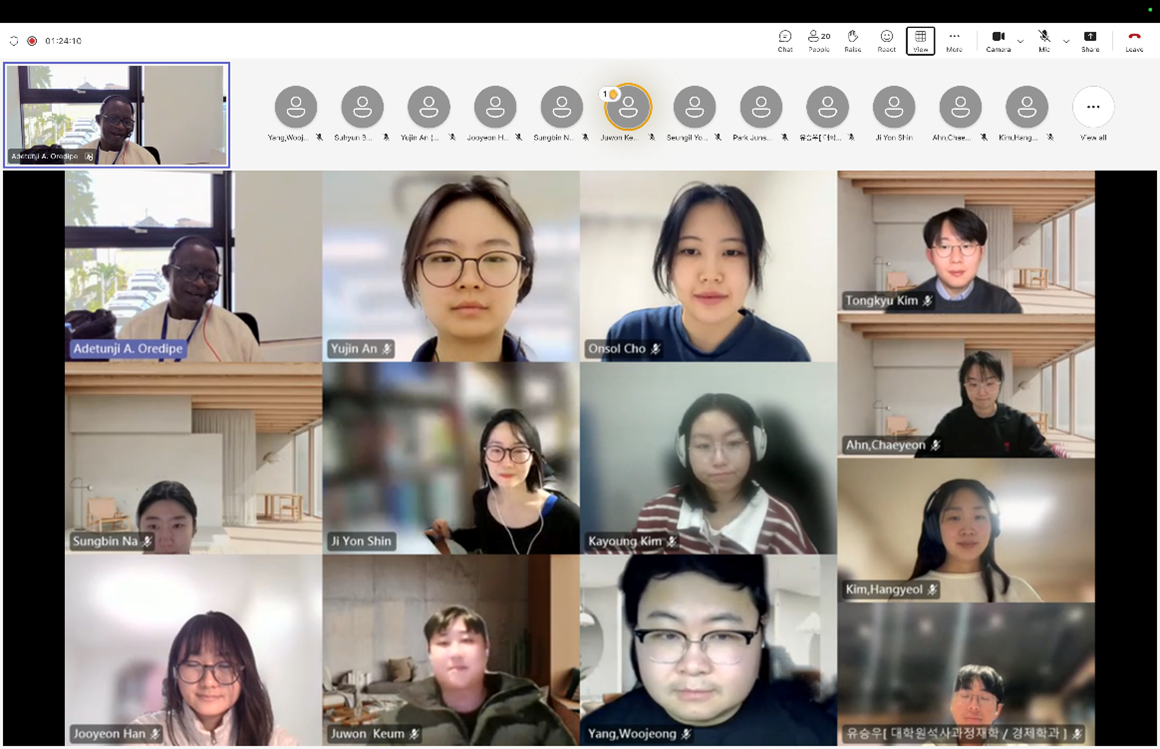
On January 29, as part of the KGGTF Youth Internship Program, Dr. Adetunji Oredipe, Senior Agriculture Economist, delivered a lecture on the YaWoCA Project, a Climate-Smart Agriculture (CSA) and entrepreneurship initiative in Sierra Leone supported by the Korea Green Growth Trust Fund (KGGTF). The lecture explored how empowering youth and women can address climate vulnerability, strengthen food security, and support rural livelihoods.
The lecture framed youth inclusion as a development imperative, noting that failure to invest in youth creates long-term economic and social risks. Climate change was presented as a direct threat to food security and economic growth in Sierra Leone, while CSA was introduced as a practical solution to increase productivity, strengthen resilience to erratic rainfall, and promote sustainable land use. Youth and women were identified as key agents of change, despite facing structural constraints.
Agriculture employs over 60 percent of Sierra Leone’s population, making CSA central to national development. However, land degradation, unpredictable rainfall, limited access to quality inputs, and outdated practices undermine productivity. Even in one of Africa’s wettest countries, rainfall variability has weakened traditional farming systems, reinforcing the need for climate-smart approaches.
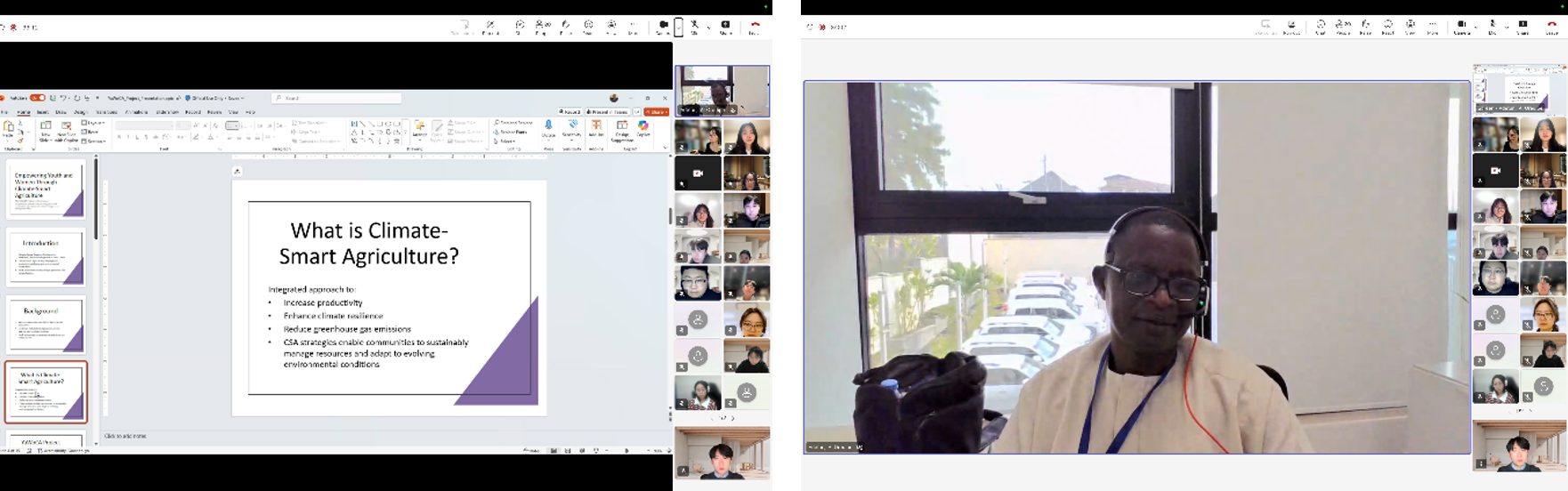
CSA was defined as an integrated approach that increases productivity, enhances resilience to climate shocks, and reduces greenhouse gas emissions. Beyond technology, CSA enables collective resource management and community-level adaptation. The YaWoCA Project targeted youth aged 18 to 35 and women smallholder farmers through a three-part strategy: capacity building in CSA and entrepreneurship, provision of small startup grants and input kits, and support for market-oriented agribusiness development. Targeting reflected demographic realities, with youth comprising a large population share and women accounting for over 60 percent of the agricultural labor force, both facing disproportionate climate vulnerability.
Key barriers included limited financing, climate-related shocks, low literacy, scarce improved seeds, declining extension services, and negative youth perceptions of agriculture. To address these, the project emphasized hands-on training, digital literacy, and direct engagement with greenhouses and solar irrigation systems, establishing more than 20 facilities across multiple districts. The grant was linked to larger national agriculture projects, ensuring continuity beyond the grant period.
Project impacts were significant. A total of 424 individuals were directly trained, with over 1,200 indirect beneficiaries reached through peer-to-peer learning. Evaluations showed sustained improvements in CSA knowledge and practices. Despite adverse weather, participation remained at 100 percent. Women reported increased engagement, improved plot management, and stronger roles in group decision-making.
Success stories illustrated longer-term impact, including a young entrepreneur from Port Loko who established a solar-powered vegetable farm supplying local markets year-round. Many participants launched viable agribusinesses and formed active farming networks.
The lecture concluded that CSA adoption requires continuous training, integration of adult literacy, expanded climate information services, improved financial access, and flexible delivery systems. Embedding CSA into Feed Salone, district plans, extension reforms, youth employment strategies, and women’s empowerment policies is essential for scale. The YaWoCA Project demonstrates that targeted grant financing, when linked to existing programs, can deliver durable and inclusive climate-resilient development outcomes.