
This section presents strategic perspectives on advancing sustainable growth in developing countries by encouraging stronger engagement with the private sector and highlighting the importance of scalable innovation for resilient, self-sustaining economic progress.
Compiled by: Kyoungshin Kim, KGGTF Consultant
Responding to Low-Frequency Structural Shifts: Jobs, Stability, and the Imperative of Early Investment
(How to create jobs for the world's 1.2 billion new workers)
Low-frequency structural forces—demographic change, climate stress, and energy transition—are reshaping economies and institutions. As President Ajay Banga underscored in a recent op-ed, roughly 1.2 billion young people in developing countries will enter the labor market over the next 10–15 years, while only about 400 million jobs are expected to be created. Without productive employment, institutions come under strain and risks of instability rise. With early, targeted investments in people, markets, and systems, demographic change can fuel growth and resilience rather than fragility.
If low-frequency pressures are ignored, they become crises. Addressed early, they become opportunities.

What We’re Seeing: Structural Signals
- Demographics: Youth cohorts expanding fastest in regions with limited job creation, risking long-term scarring if not matched with productive opportunities.
- Climate and natural resource stress: Water and food security are foundational to livelihoods; failures cascade into economic and social instability.
- Energy transition: Power system reliability and clean mobility frameworks are prerequisites for attracting investment and creating future-ready jobs.
How We Respond: A Consistent Pathway
- Identify structural risks early and quantify them.
- Design policy, regulatory, and institutional frameworks that enable markets.
- Link analysis and policy to investment operations for scaled impact.
Case 1: Kenya—Turning Demographic Pressure into Productivity Gains
(KGGTF Annual Report 2022, p.50 – “Leveraging Digital Technologies for Scaling up Climate Smart Agriculture in Kenya”)

- Context: Rapid growth in rural youth populations demands scalable pathways into productive work.
- Approach: The digital agriculture platform (OMFP), integrated with a World Bank agricultural value chain operation, leverages AI and big data to improve decisions, yields, and incomes.
- Scale and Reach: The platform is expanding from one million farmers to a projected four million by 2026.
- Why It Matters: Digital and institutional integration converts demographic expansion into productivity growth, strengthening household incomes and market participation.
Case 2: Angola—Water Security as a Platform for Livelihoods and Jobs
(KGGTF Annual Report 2023, p.54 – “ANGOLA Building Drought Resilience in the South of Angola through Geospatial Information and Nature-Based Infrastructure”)
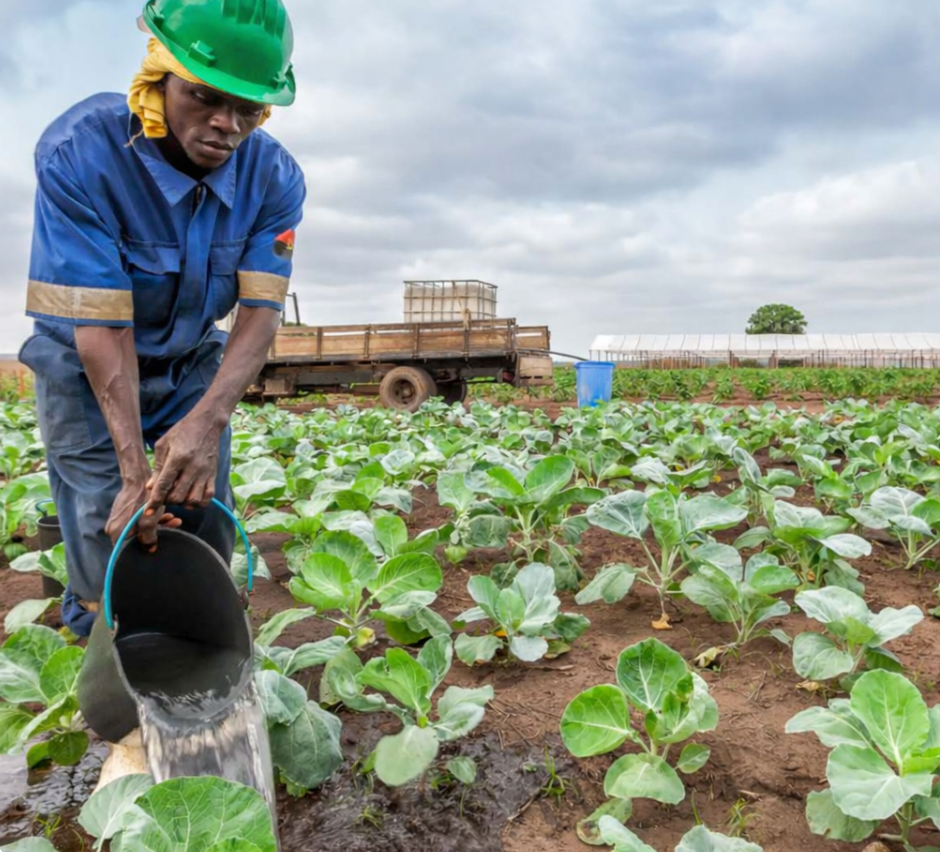
- Context: Southern Angola experienced the worst drought in three decades, with more than 80 percent of boreholes becoming non-functional—disrupting agriculture and household resilience.
- Approach: KGGTF supported geospatial water analysis, nature-based solutions, and municipal water planning to rewire governance and operations.
- Scale and Financing: Analytical groundwork enabled the $450 million RECLIMA project and mobilized over $1.5 billion in co-financing.
- Why It Matters: Moving beyond emergency relief to systemic water governance restored the foundation of agricultural production, employment, and social stability.
Case 3: Mongolia—Designing the Energy Transition for Future Employment
(KGGTF Annual Report 2024, p.88 – “Transforming Mobility and Energy Storage for a Sustainable Future”)
- Context: Structural constraints tied to coal dependence and grid instability made the energy transition both a necessity and an opportunity.
- Approach: KGGTF supported an electric vehicle roadmap with 31 policy recommendations and a Battery Energy Storage System potential assessment.
- Scale and Financing: This institutional design informed a $147 million World Bank investment operation.
- Why It Matters: Regulatory, tariff, and market design frameworks create the enabling environment for clean mobility and storage industries—unlocking new job pathways and private investment.
The Role of KGGTF: Catalyst for Enabling Design and Scaled Delivery
Across the three cases, a consistent pathway emerges: early identification of long-term risks, design of policy and institutional frameworks, and linkage to large-scale investment.
KGGTF’s contribution extends beyond financing. Upstream, it supports policy analysis and institutional design, strengthens regulatory and market frameworks, and helps mitigate structural risks. This enables pilots to be institutionalized and technical assistance to translate into full-scale World Bank investment operations.
In Kenya, Angola and Mongolia, early-stage enabling design was foundational for mobilizing investment at scale and expanding employment.
In short, KGGTF acts as a catalyst—converting targeted technical assistance into scalable investment and job creation.
- Analysis informs policy.
- Policy enables investment.
- Investment delivers jobs and institutional resilience.
Addressing low-frequency structural change is not a crisis response—it is structural design. KGGTF works at the upstream starting point of that design.
What’s Next: Early Action, Scaled Impact
High-frequency shocks will persist, but sustainable growth and stability will hinge on how countries meet low-frequency forces head-on. Demographics, climate resilience, and energy transition are present realities, not distant risks. The choice is whether they escalate into instability—or become engines of jobs, growth, and resilience.