
By: Kayoung Kim, KGGTF 2026 Youth Intern
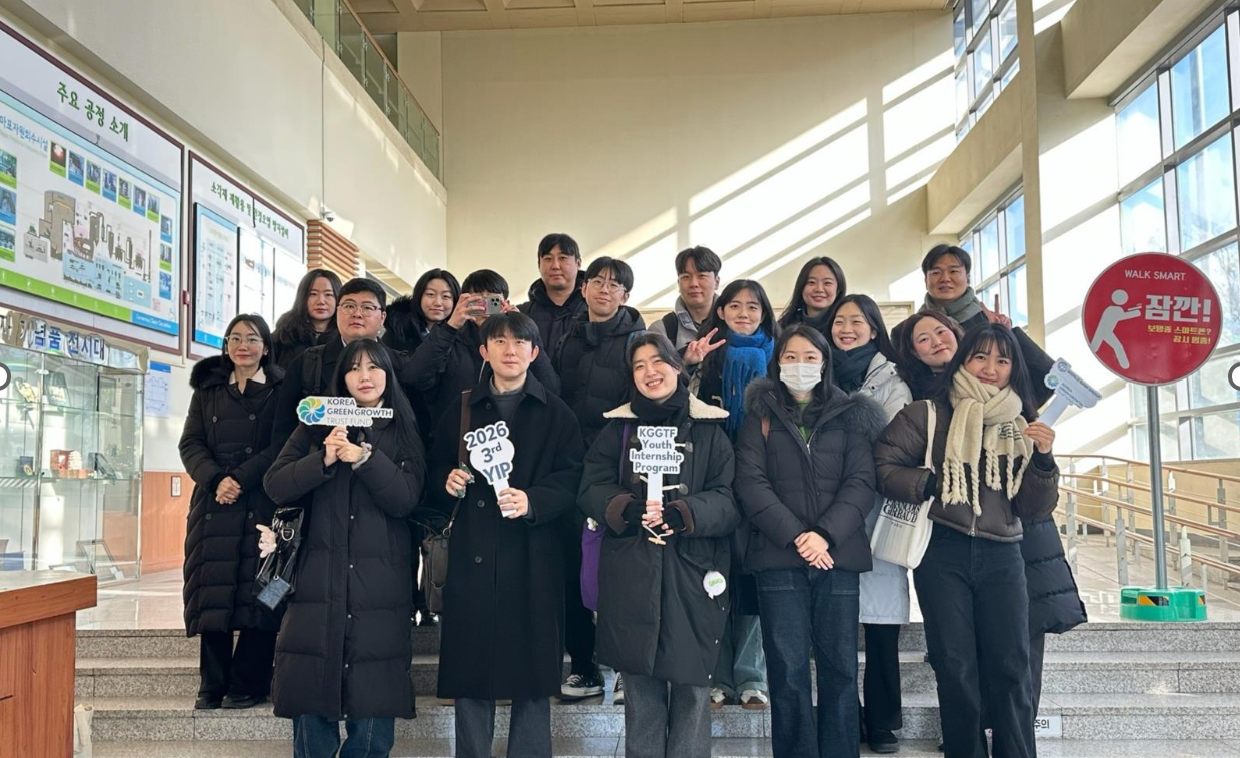
On January 20, 2026, the KGGTF Youth Internship Program visited the Mapo Resource Recovery Plant, Haneul Park, and the Seoul Energy Dream Center in Mapo-gu, Seoul. Through this visit, interns gained firsthand insight into how urban waste can be transformed into energy and how buildings can operate as self-sustaining systems, experiencing key benchmarks in Seoul’s waste-to-energy infrastructure and zero-energy architecture.
“Waste Is Energy”: Inside the Mapo Resource Recovery Plant and Seoul’s Urban Sustainability Sites
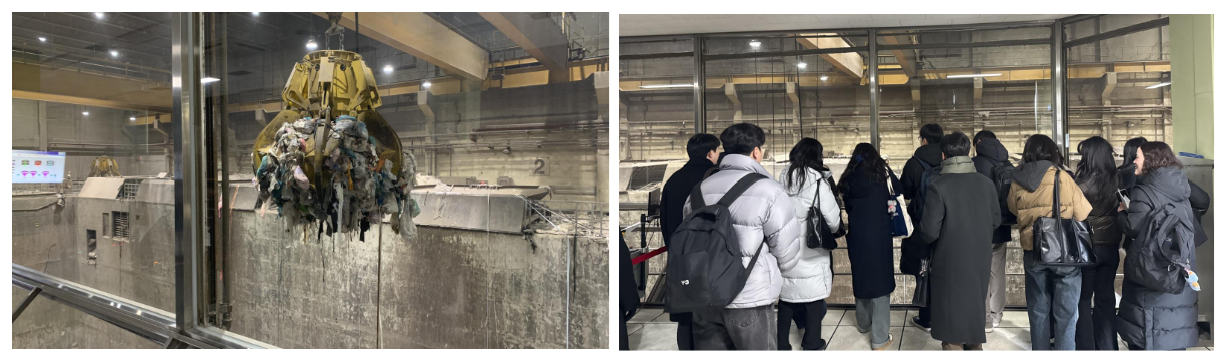
The Mapo Resource Recovery Facility is a waste-to-energy plant that converts household waste into electricity and thermal energy through incineration, while minimizing environmental impacts through advanced air pollution control systems. Operating safely within a dense urban area, the facility plays a vital role in reducing landfill dependence and urban environmental pollution.
During the introductory lecture, the Mapo Resource Recovery Plant was described as “operating even while the city sleeps—not simply as a waste disposal site, but as an eco-friendly space where nature and people coexist, setting a benchmark for urban environmental services.”
Among Seoul’s five resource recovery facilities, Mapo is the third largest, processing general waste bags from five districts, including Jongno, Jung-gu, Yongsan, Seodaemun, and Mapo. Excluding recyclables and food waste, the plant currently incinerates approximately 600 tons of waste per day.
Plant Tour: How Waste Becomes Energy
The plant tour and Q&A session covered a wide range of subjects: pollution-control filters are replaced every three years, with activated carbon applied in the interim to remove fine dust and contaminants. Incineration residue is separated into fly ash and bottom ash, with the latter supplied as raw material to brick manufacturers.
Approximately 60% of the electricity generated is used for facility operations, while the remaining 40% is sold through the national grid. Residual heat is recovered to produce steam, which is used for additional power generation and supplied as steam and hot water to a neighboring district heating system.
During the on-site tour, interns were particularly struck by the central control room and the waste bunker. Observing massive volumes of waste stored deep below ground and cranes feeding waste into the incineration system offered a concrete view of the first stage of the waste-to-energy process, underscoring the scale and complexity behind everyday waste disposal.
Haneul Park: From Landfill to Landmark
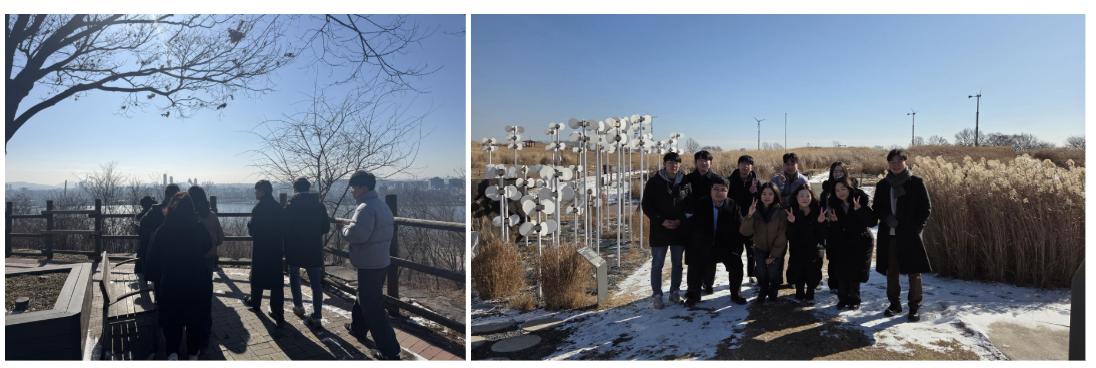
The visit continued at Haneul Park, adjacent to the resource recovery facility. Part of the World Cup Park complex opened in 2002; Haneul Park was created by restoring the former Nanjido landfill.
Once a rich ecological area, Nanjido became a massive landfill between 1978 and 1993, accumulating waste equivalent to 13 million 8.5-ton trucks and forming the world’s tallest trash mountain at 98 meters above sea level. Today, the site has been transformed into a 2.7 million square meter environmental and ecological park.
Haneul Park now features themed zones such as silver grass fields, reed wetlands, and mixed grasslands, along with public art installations. From the observatory, visitors can enjoy panoramic views of the Han River. Interns expressed their surprise that a former landfill has become one of Seoul’s most beloved public spaces, reflecting on the long-term commitment required for ecological restoration.
Seoul Energy Dream Center: Korea’s First Zero-Energy Public Building
The final visit took place at the Seoul Energy Dream Center (SEDC), Korea’s first zero-energy public building. Designed to produce as much energy as it consumes, the center serves as both a demonstration site and a benchmark for sustainable architecture.
Introducing the facility, the lecturer noted that “the building serves as a kind of indicator for saving energy,” explaining it was established by the Seoul Metropolitan Government to support its vision of an energy self-sufficient city and stands as Korea’s first zero-energy, eco-friendly public building.
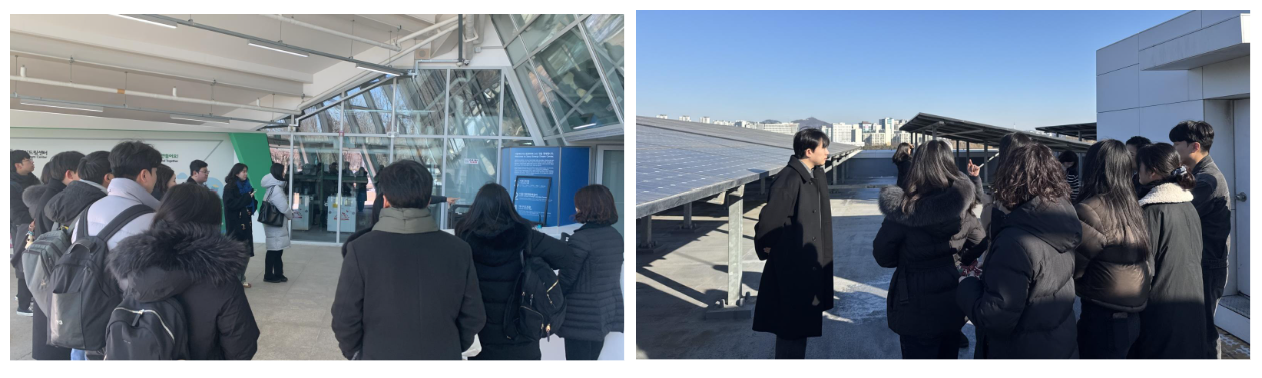
SEDC incorporates passive design elements such as high-performance insulation and airtight construction, reducing energy consumption by up to 70% compared to conventional buildings. Active design features include high-efficiency systems and a Building Energy Management System (BEMS), while renewable energy technologies such as rooftop solar panels support its net-zero energy performance.
During the tour, interns observed rainwater harvesting systems that collect, treat, and reuse water for landscaping and cleaning, as well as advanced heat pump and ventilation systems designed to manage seasonal energy demand. In the subsequent Q&A session, interns raised questions about how surplus energy is managed and whether zero-energy building technologies could be more widely applied to residential and private-sector buildings.
Moving Forward Toward a Sustainable City
In a day’s work, KGGTF interns gained firsthand understanding of how urban environmental systems function in practice. Even on one of the coldest days of the year, the field visits delivered powerful and energizing lessons—reinforcing how technology, policy, and long-term vision converge on the ground. For the interns, the experience offered clear direction as future practitioners committed to building a more sustainable and livable city.