
On November 03-07, 2025, a delegation from Türkiye’s General Directorate of Forestry traveled to the Republic of Korea for a five-day knowledge exchange focused on integrated forest fire management. Funded by the Korea Green Growth Trust Fund (KGGTF) and supported by ECA Environment, the exchange was delivered in partnership with the Asia-Pacific Forest Forum and the Asian Forest Cooperation Organization, the visit directly supports implementation of the $400 million Türkiye Climate Resilient Forests Project (P179345).
Across both countries, the urgency is clear. Rising temperatures, prolonged drought, and expanding wildland–urban interfaces are pushing forest fire frequency and intensity to new extremes. Korea experienced the worst fire season in its recorded history in 2025, while Türkiye’s 2021 megafires revealed gaps in early warning, coordination, and preparedness. The study tour focused on bringing the two countries together to observe systems in action, exchange operational experience, and identify opportunities for practical cooperation.
The week opened at AFoCO Headquarters, where both delegations reviewed the regional landscape of forest fire risk and discussed why prevention and readiness have become central pillars of resilience.
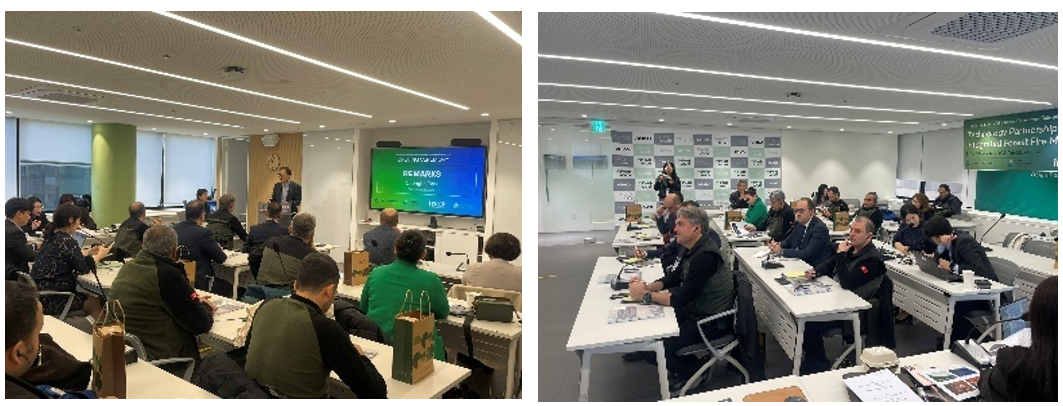
The group then visited the National Institute of Forest Science, where Korea’s scientists demonstrated how the country uses integrated risk maps, advanced weather modeling, remote sensing, and AI-based fire behavior prediction. These tools help Korea anticipate risk levels ahead of time and pre-position crews, aircraft, and equipment before a threat escalates. Türkiye is expanding similar forecasting capabilities under P179345, and the visit highlighted opportunities for strengthening seasonal readiness planning.
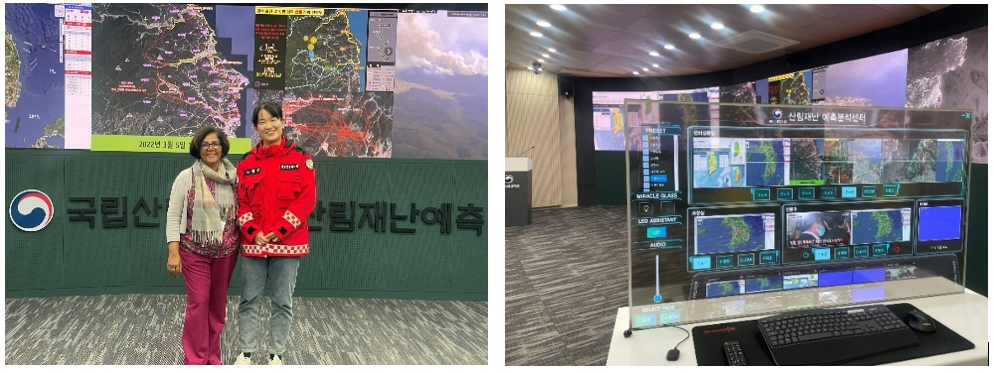
Day 2: Aerial Operations and Command Coordination
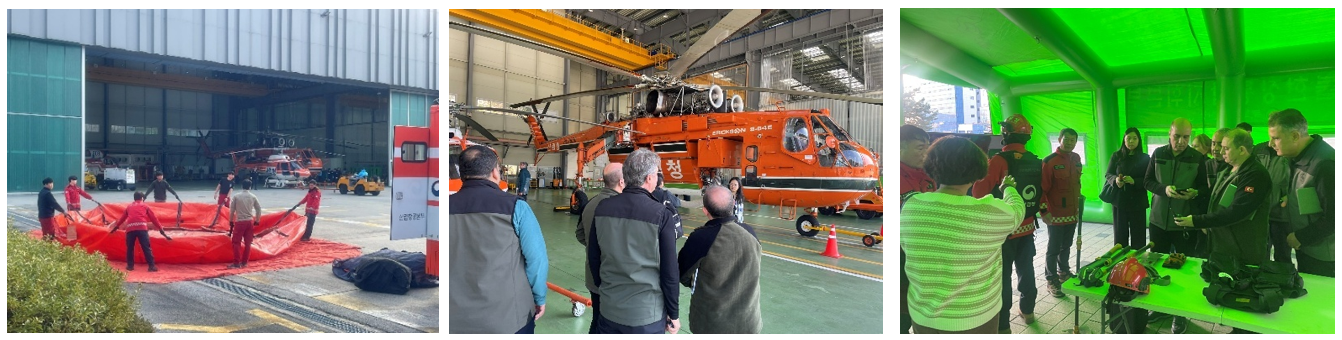
In Wonju, the delegation spent time day examining Korea’s aerial suppression systems.
At the Korea Forest Aviation Headquarters, teams explored helicopter deployment procedures, drone-supported detection, and flight safety protocols that guide response during high-risk periods. Korea’s unified aviation corps, which consolidates aircraft operation under one national structure, provides a clear model for Türkiye as it continues to scale its own aerial firefighting programs.
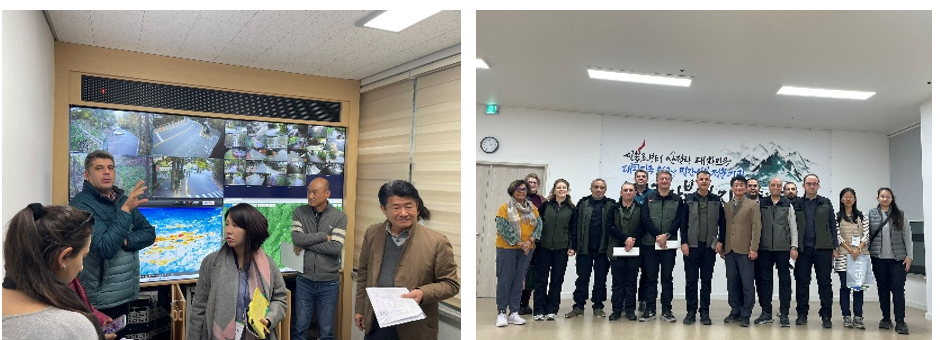
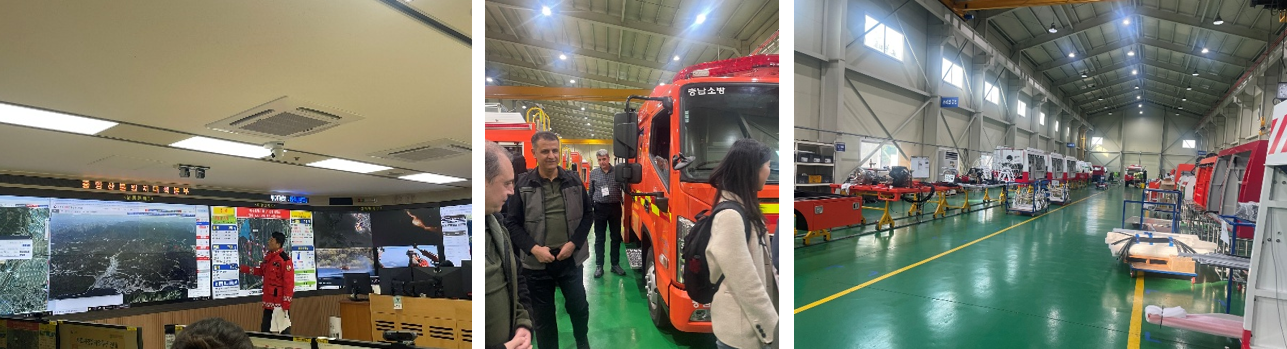
The visit continued at the North Regional Forest Service Command Center, where delegates observed how early warning data is integrated with real-time field information. Unified incident command procedures help synchronize decisions between national, regional, and local teams. Türkiye, which is prioritizing stronger multi-agency coherence, identified several coordination mechanisms that can be adapted to domestic systems.
Day 3: Landscape Resilience, Restoration, and Digital Early Warning
The third day focused on prevention and restoration.
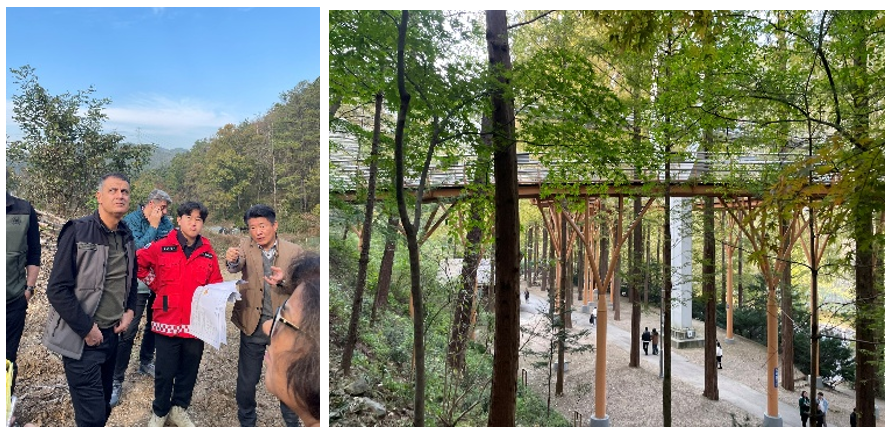
At the Sejong National Arboretum, the delegation explored landscape design approaches that reduce flammability, including diversified forest composition, fire-adapted species, and strategically planned access routes. These features are central to reducing fuel loads and improving the health of ecosystems.
Later, at the Sanjik-dong Post-Fire Restoration Site, Korea demonstrated how standardized restoration procedures and slope stabilization techniques help rehabilitate burned mountain terrain. These practices are particularly relevant to Türkiye’s own megafire recovery zones.
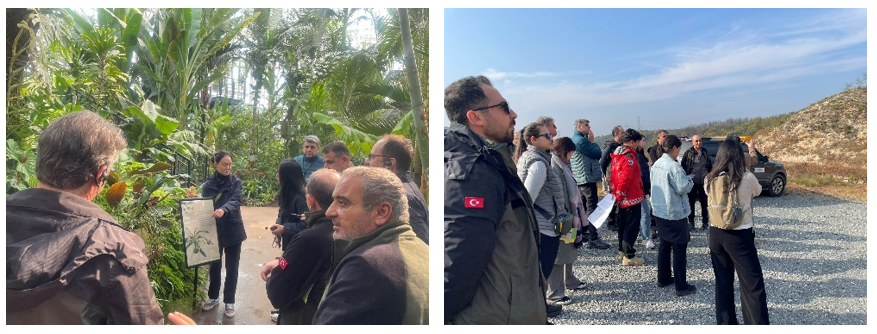
The visit to Jangtaesan National Recreation Forest highlighted Korea’s ICT-based early warning systems, where camera networks, automated alerts, and digital monitoring platforms allow faster detection and more efficient dispatch.
The day concluded at the Korea Forest Fire Management Service Association, where teams learned how Korea manages firefighter training pipelines and uses private-sector partnerships to expand capacity during high-risk seasons.
Governance and Domestic Innovation
In Daejeon, the delegation visited the Korea Forest Service Headquarters, where they were briefed on Korea’s national governance model. Korea’s clear hierarchy, inter-ministerial agreements, and standardized procedures ensure rapid decision-making and resource sharing. These systems illustrate how command and control functions can be institutionalized, not treated as ad hoc emergency mechanisms.
At Hanseo Precision Industry, teams saw how Korea’s forest fire challenges have spurred a domestic innovation ecosystem. The company manufactures specialized slope-capable fire engines, suppression equipment, and tactical tools that reflect the demands of Korea’s mountainous terrain. Türkiye expressed interest in how procurement, maintenance, and customization are handled at the national level.
Key Operational Areas of Learning for Türkiye
Throughout the visits, Türkiye’s delegation identified several operational components that could be of interest as Türkiye further enhances its fire management approach.
Forecasting and Early Warning
Korea’s integrated risk maps, weather modeling, remote sensing, and AI monitoring systems show how proactive readiness can reduce response times. These tools support the project’s goal of strengthening seasonal forecasting and predictive analytics.
Aerial Fire Response
Korea’s state-managed aviation corps and unified flight protocols help ensure consistent standards and rapid mobilization. These systems reinforce Türkiye’s plans to expand and modernize its aerial suppression capabilities.
Command and Control
Korea’s coordinated national–regional–local model provides a strong example of unified incident command. Türkiye is investing in similar structures to improve multi-agency coherence during forest fire response.
Post-Fire Rehabilitation
Korea’s standardized restoration and slope stability procedures offer concrete lessons for Türkiye’s post-fire recovery efforts, especially in fire-prone mountain regions.
A Foundation for Continued Cooperation
While technical learning was central, the study tour underscored a deeper reality. No country has the luxury of time to experiment with untested approaches in the face of rapidly escalating forest fire risk. What matters now is identifying solutions that have been proven to work, understanding why they succeed, and adapting them quickly and effectively to new contexts.
This is where the World Bank plays a critical role. By convening countries, distilling best-in-practice models, and helping teams tailor these approaches to their own landscapes, institutions, and capacities, the Bank accelerates the shift from learning to action.
Türkiye and Korea have already identified several areas where cooperation will continue, including digital decision support tools, ICS strengthening, restoration protocols, and aerial operations. A leadership-level meeting between OGM and the Korea Forest Service will be convened to advance discussions on these priorities.
Materials from the visit, including presentations and videos, will be established as training programs and be made available through the KGGTF grant page and the WBG Forest Fire event page, ensuring broad access across World Bank country teams.
As forest fire risks continue to rise, exchanges like this demonstrate the power of shared experience. By learning from what already works and adapting proven solutions to local needs, countries can strengthen resilience faster, more efficiently, and with greater confidence.
Knowledge exchange PPT materials available here