
As part of the KGGTF-funded activities, a diverse South African government delegation traveled to Korea from June 14–22, 2025. The week-long knowledge exchange was hosted by the Korea Mine Rehabilitation and Mineral Resources Corporation (KOMIR), which served as a technical guide and knowledge partner.
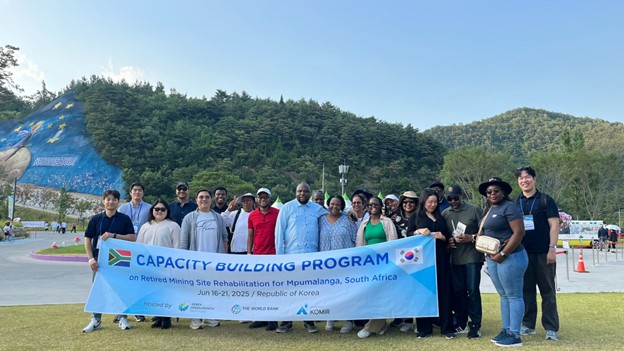
Composition of the Delegation
The delegation of 18 people included senior officials and experts from governmental departments, industry representatives, and local authorities, facilitating a multidisciplinary approach to knowledge exchange. Key institutions represented were the Mpumalanga Department of Agriculture, Rural Development, Land and Environmental Affairs (DARDLEA), Department of Mineral and Petroleum Resources (DMPR), Mpumalanga Provincial Government, Eskom, Sasol, Nkangala District Municipality, the Presidency’s Just Energy Transition Project Management Unit, and the Mpumalanga Green Cluster Agency.
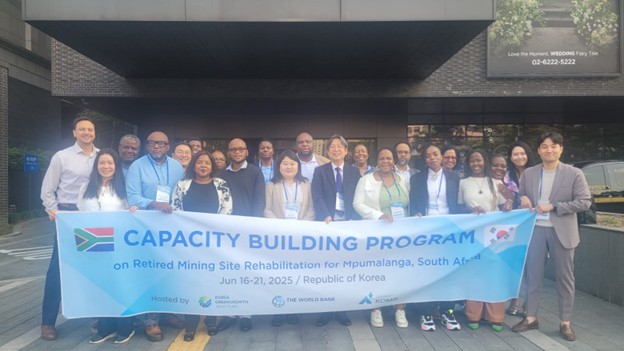
A Week of Immersive Learning: Site Visit Highlights
The knowledge exchange program gave the South African delegation an understanding of Korea’s innovative post-mining land restoration, covering both ecological recovery and economic development.
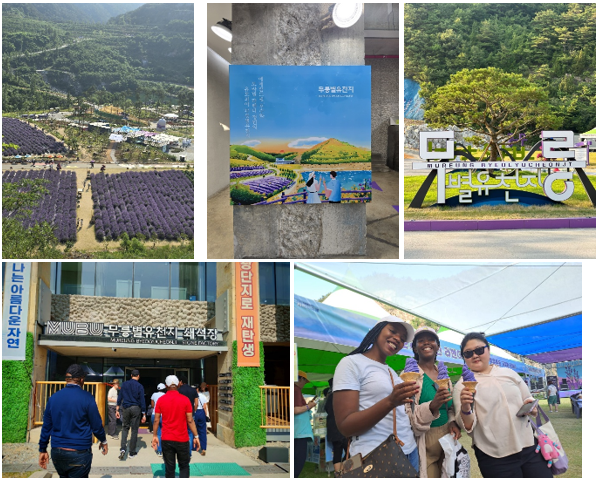
- Mureung Byeolyucheonji, Donghae City: From Quarry to Ecological Haven
Once a barren limestone quarry, Mureung Byeolyucheonji has been transformed into a model of ecological restoration and sustainable tourism. Through reforestation, land management, and community involvement, the site now features diverse habitats, walking trails, wetlands, and educational facilities. Its popular lavender fields attract visitors, create jobs, and demonstrate how degraded land can be revitalized for environmental and economic gain, highlighting the value of nature-based solutions and inclusive planning.
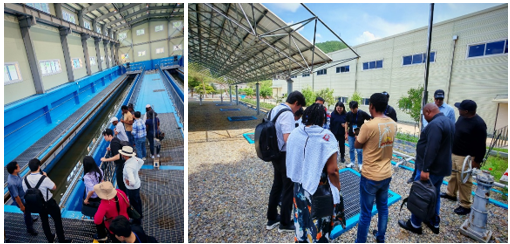
- Taebaek Hamtae Mine Drainage Facility: Advancing Water Management in Post-Mining Landscapes
The visit to the Taebaek Hamtae Mine Drainage Facility showcased Korea’s advanced approach to managing acid mine drainage (AMD) in former mining areas. Situated in Taebaek, the facility treats acidic, metal-contaminated water from abandoned mines using multi-stage processes: collection, chemical neutralization, sedimentation, filtration, and sludge management. Real-time monitoring and strict maintenance ensure efficiency and compliance. The facility has greatly improved local water quality, restored ecosystems, and safeguarded water resources for agriculture and communities.
- High1 Chuchu Park, Jeongseon: Creative Land Repurposing
High1 Chuchu Park is a former coal mining area transformed into a cultural and recreational destination through collaboration among local government, private sector, and civil society. The park now offers museums, leisure facilities, and event spaces that honor the region’s mining heritage while creating new economic opportunities. This revitalization has boosted the local economy, generated jobs, and strengthened community pride, showing how joint efforts can turn post-mining sites into sustainable assets for both residents and visitors.
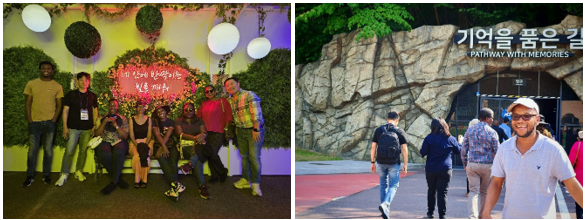
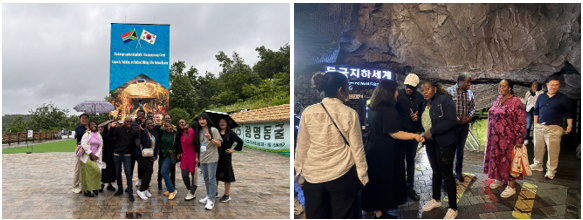
- Gwangmyeong Cave: Mining Heritage Reimagined
Gwangmyeong Cave is a former gold mine transformed into a cultural, educational, and tourism hub. Now featuring exhibitions, art, and environmental programs, the site incorporates sustainable energy and accessibility. Attracting hundreds of thousands of visitors each year, it boosts the local economy and promotes environmental awareness, demonstrating how post-mining spaces can become vibrant community assets that blend heritage with modern development.
Dissemination and Impact
Following the conclusion of the study tour, the outcomes and lessons were disseminated through several channels. The program received notable media coverage in South Korea, including articles in Global Economic News (https://rb.gy/6f72jy) and eToday (https://m.etoday.co.kr/news/view/2481238), which highlighted the tour’s focus on knowledge exchange and sustainable rehabilitation. In addition, the South African delegation compiled a detailed mission report, which was submitted to the Government of South Africa.
The report synthesized key insights and outlined practical recommendations tailored to South Africa’s context, including prioritizing alternative industries, integrating renewable energy, addressing environmental remediation challenges, and promoting inclusive development. These outcomes will contribute to the ongoing refinement of national and provincial strategies for managing post-mining transitions.