
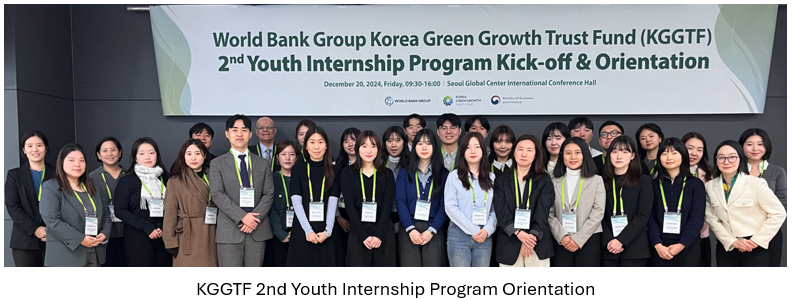
By: Guenhee Kim, KGGTF 2025 Youth Intern
The Korea Green Growth Trust Fund (KGGTF), established in 2012 through a partnership between the World Bank and the Republic of Korea, promotes Green, Resilient, and Inclusive Development (GRID). To foster the next generation of sustainability leaders, KGGTF’s six-month Youth Internship Program empowers young professionals through expert-led lectures, immersive site visits, and project-based assignments - equipping them with the knowledge, skills, and networks to lead in sustainable development.
But what does it truly mean for youth to lead the green economy - and why does it matter now more than ever? Youth bring fresh perspectives, digital fluency, and a strong drive to address today’s challenges. As the world moves toward sustainability, they are uniquely positioned to drive innovation and bridge disciplines. This emphasis on youth leadership was highlighted during the 2nd Youth Internship Program's final sharing and closing event, where Amal Kadir, Specialist at the UN Asian and Pacific Training Centre for ICT for Development, emphasized that "youth voices in shaping digital solutions" are essential in today's rapidly changing world. Indeed, empowering young people is not optional - it is foundational to building resilient and inclusive societies.
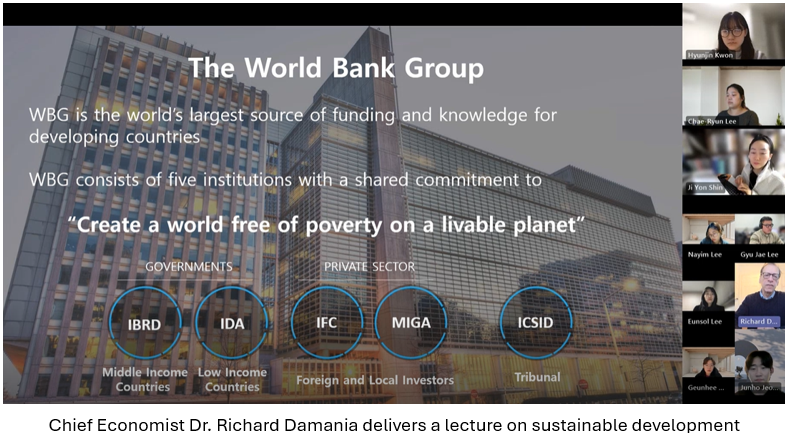
Recognizing the importance of empowering youth, the KGGTF Youth Internship Program offers a rare and comprehensive blend of academic insight and hands-on experience. Over six months, I participated in expert-led lectures on topics such as green growth strategies, which deepened my understanding of the multifaceted challenges of sustainability. In one particularly thought-provoking session, Dr. Richard Damania, Chief Economist at the World Bank, asked, “Can we deliver development that is sustainable and just?” and reminded me that “the World Bank is more than a bank - money is almost the least important thing.” This prompted me to look beyond technical fixes and consider what truly makes development sustainable and meaningful.
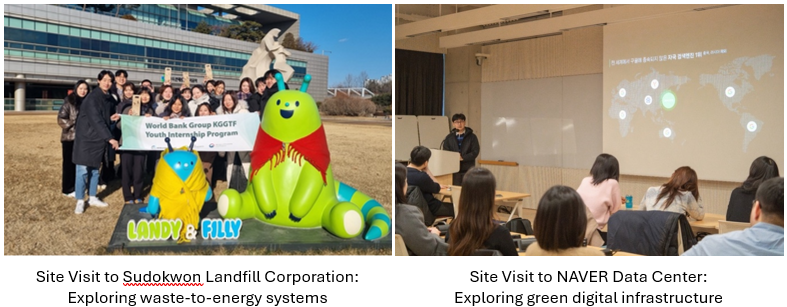
These insights came to life through field visits that showed how different sectors are advancing sustainability. Sites like the Sudokwon Landfill Corporation and the FAO Office offered insights into sustainability from different angles - while the landfill showcased circular waste-to-energy practices and green infrastructure, the FAO session highlighted inclusive strategies for climate-resilient agriculture and food security. Meanwhile, visits to NAVER’s GAK Data Center and Ondream Society illustrated the role of green digital infrastructure and climate technology in accelerating innovation in the private sector.
These academic and field-based experiences were further enriched by career development sessions with experts from international development, sustainable finance, and energy sectors. Their personal stories and practical advice helped me reflect on how to align my skills and values with meaningful work.

As part of the program, I also participated in a team project examining KGGTF’s energy sector grants from 2014 to 2024. Working with peers from diverse backgrounds, I analyzed funding trends, strategic priorities, and project outcomes. This process sharpened my skills in policy analysis and strategic communication, with direct feedback from World Bank professionals.
My experience with the KGGTF Youth Internship Program has shaped my long-term commitment to sustainability. With a background in urban and environmental planning, I aim to contribute to inclusive and climate-resilient development through practical and policy-driven solutions. The program was not just a steppingstone - it was a launchpad. I’m grateful for the community and knowledge it has given me as I move forward in my journey.