
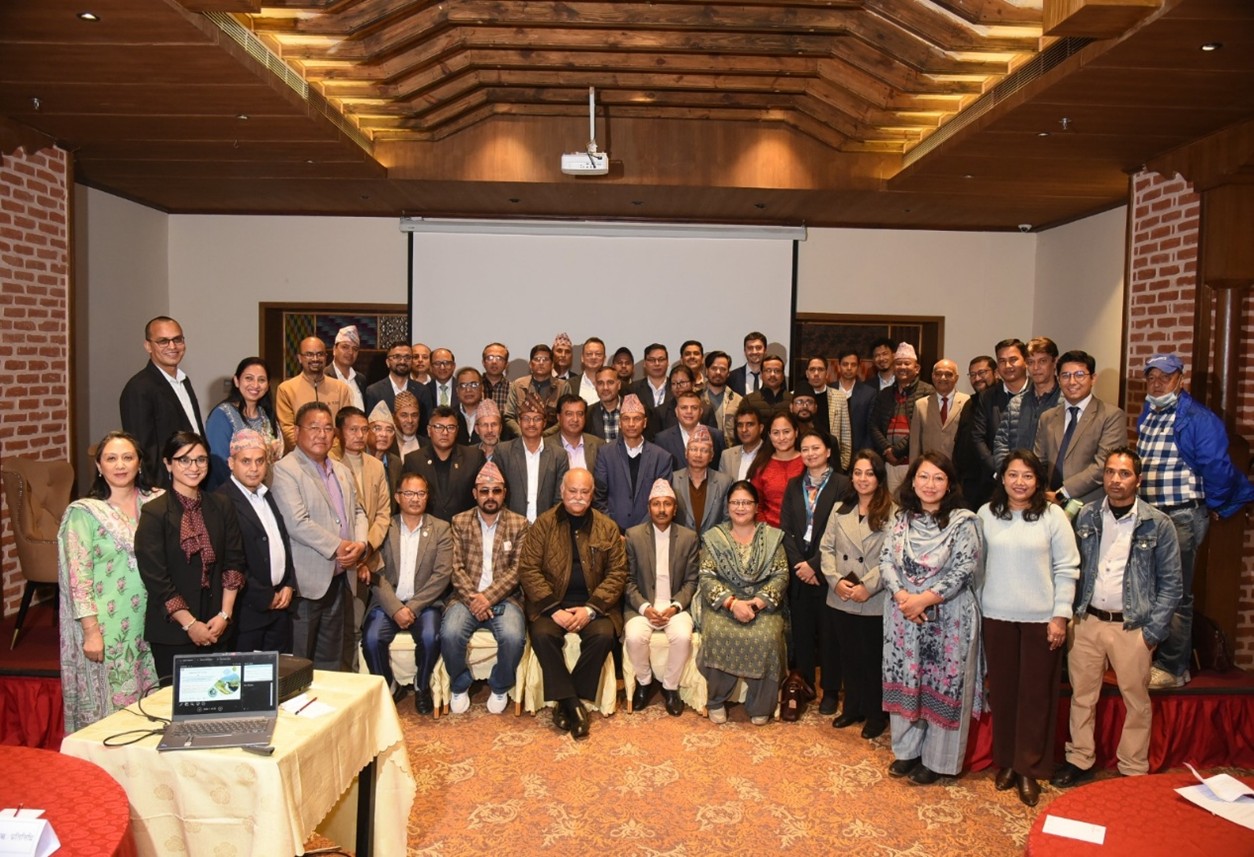
On March 6th, Water and Energy Commission Secretariat (WECS) hosted a significant workshop titled "Towards Effective Water Governance for Integrated River Basin Level Planning and Management in Nepal." This event was part of a program grant from the Korea Green Growth Trust Fund (KGGTF), reinforcing the World Bank’s commitment to supporting Nepal’s journey toward more effective and integrated water governance.
The workshop was a resounding success, drawing enthusiastic participation from a diverse range of stakeholders, including high-level ministerial officials, parliamentarians, local government mayors, development partners, and civil society organizations. To name few Ms. Sarita Dawadi, Secretary, Ministry of Energy, Water Resources & Irrigation, Mr. Madhu Prasad Bhetuwal, Secretary, Government of Nepal (WECS), Mr. Deepak Bahadur Singh Chair, Infrastructure Development Parliamentarian Committee, David Sislen, Divisional Director of World Bank, Mr. Arnaud Cauchois, Country Director, ADB graced the event.
Ms. Sarita Dawadi, Secretary at the Ministry of Energy, Water Resources, and Irrigation, emphasized that the government is prioritizing integrated water resource management and has established River Basin Offices to ensure the conservation and efficient use of water resources. She highlighted the importance of water allocation in Nepal’s federal structure, given the competing needs of various provinces. Echoing similar sentiments, Madhu Prasad Bhetuwal, Secretary of the Water and Energy Commission Secretariat, said the government is advancing the River Basin Plan with high priority, given that water is Nepal’s primary natural resource.
In addition, Mr. David Sislen in his remarks highlighted the World Bank commitment to supporting Nepal’s goals for water security and climate resilience and its key water-related policies to strengthen governance and sustainability. Both Directors from Asian Development Bank and World Bank reaffirmed their support and assured that donor agencies would continue to assist Nepal in protecting and managing its water resources, which is a positive step towards achieving our goals.
Discussions mainly focused on river basin management, providing a platform to explore practical solutions, share insights, and chart a path forward for water management in Nepal’s river basins.
An Important Step: The National Water Resources Bill
One of the most exciting developments to emerge from the workshop was the anticipated passage of the National Water Resources Bill in Nepal’s parliament, expected in the coming weeks. This legislation is poised to transform the country’s water governance framework. Once passed, the bill will empower the Water and Energy Commission Secretariat (WECS) with the authority to implement integrated river basin management at local, provincial, and national levels.
The bill represents a forward-thinking approach to water governance, recognizing the importance of managing water resources at the river basin level rather than through fragmented efforts. This integrated approach will ensure that the needs of both upstream and downstream communities are considered, leading to more sustainable and equitable water management practices.
Challenges and the Path Forward
While the bill is a crucial step toward integrated water management, significant challenges remain. WECS currently faces limitations in technical capacity, human resources, and infrastructure — gaps that need to be addressed to effectively implement the new mandate.
To overcome these challenges, WECS is seeking substantial support from development partners, aiming to bring in global expertise in Integrated Water Resources Management (IWRM). The focus is on strengthening data systems, enhancing technical know-how, and improving infrastructure. By collaborating with experienced organizations, Nepal hopes to build sustainable solutions that will not only address immediate gaps but also create long-term resilience in the country’s water governance systems.
The Way Forward
The road ahead is promising but will require collaboration, investment, and a shared vision for water governance. The workshop in Kathmandu laid a solid foundation for continued dialogue and action. With the support of development partners and the passage of the National Water Resources Bill, Nepal is on track to establish a robust and effective system for integrated river basin management — one that will benefit communities and ecosystems across the country.